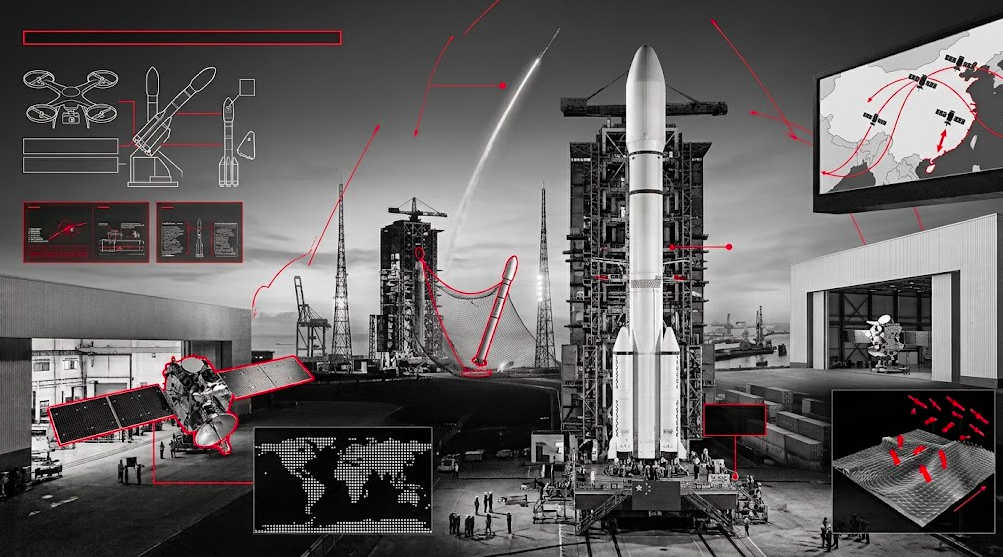
China's Shenlong space plane released an unknown object while in orbit during its fourth mission on February 6, 2026. The launch took place from China's Jiuquan Satellite Launch Center atop a Long March 2F rocket. The purpose of the mission was undisclosed to the public, but recent observations by LeoLabs suggest the involvement of the mystery object. LeoLabs detected the object near Shenlong and confirmed it was released from the space plane. This activity aligns with past sub-satellite deployments by the Shenlong space plane.
Shenlong, also known as the "Divine Dragon," is a reusable space plane that launches like a rocket but lands on a runway like an aircraft. Its design draws comparisons to the X-37B of the United States Space Force and NASA's space shuttle. Details about Shenlong are scarce due to the secretive nature of China's space program. Limited images of the space plane exist, primarily captured through telescopes on the ground.
Observers previously noted instances where Shenlong appeared to release objects in space. In June 2024, suspicions arose that the space plane might have deployed a subsatellite or discarded unnecessary hardware towards the end of a mission. In another incident, observers initially thought the plane had ejected six objects simultaneously, later identified as debris from the launch. Ground-based telescope images also revealed potential solar arrays extending from Shenlong.
Shenlong has engaged in rendezvous and proximity operations (RPO) during past missions, showcasing its ability to maneuver near other space objects. While RPOs can serve peaceful purposes like spacecraft maintenance, they also raise concerns about potential military applications. Both China and Russia have demonstrated interest in such capabilities, with recent incidents indicating strategic maneuvers in space. The United States is likely pursuing similar capabilities, as hinted by official artwork released by the nation.