CHINA was once bullied. But now it’s the one bullying.
During the 19th and early 20th centuries, Western imperial powers subjugated China, imposing treaties that forcibly opened its ports to the opium trade and secured territorial concessions. Britain took over Hong Kong and France dominated Guangzhouwan, while Portugal took control of Macao and Russia seized large territories along China’s northern frontier. This humiliating period in China’s history shaped President Xi Jinping’s risk calculus as the country seeks to restore its global power and pursue its perceived destiny.
China has aggressively asserted its claims in the South China Sea and sought to bring Taiwan under its control. President Xi has tied the Taiwan claim to China’s vision of national rejuvenation by 2049. Yet a military attack would result in massive economic disruption and catastrophic losses of human lives. The Philippines could even be dragged into this major conflict if the United States intervenes and blocks China’s attempt to forcibly achieve reunification.
China’s risk calculus for military confrontation will change if President Xi believes the threat of not acting is more precarious to his rule. There are three possible triggers that could force his hand to gamble on invading Taiwan. One, domestic unrest in China could outweigh the cost of forcibly reclaiming Taiwan rather than losing his authority. Second, Taiwan’s leaders could take steps to openly secede from China. And third, the US could become tied down in wars in the Middle East or Eastern Europe, while its military capabilities are strained by competing interests.
China could make a move before or by 2049. The greater danger is that a military conflict could erupt when an accidental skirmish occurs between claimant-countries in the South China Sea, or even between warships in the Taiwan Strait. But China would never expand the incident into a full-blown conflict unless it had adequate military capabilities to match those of the US and its allies.
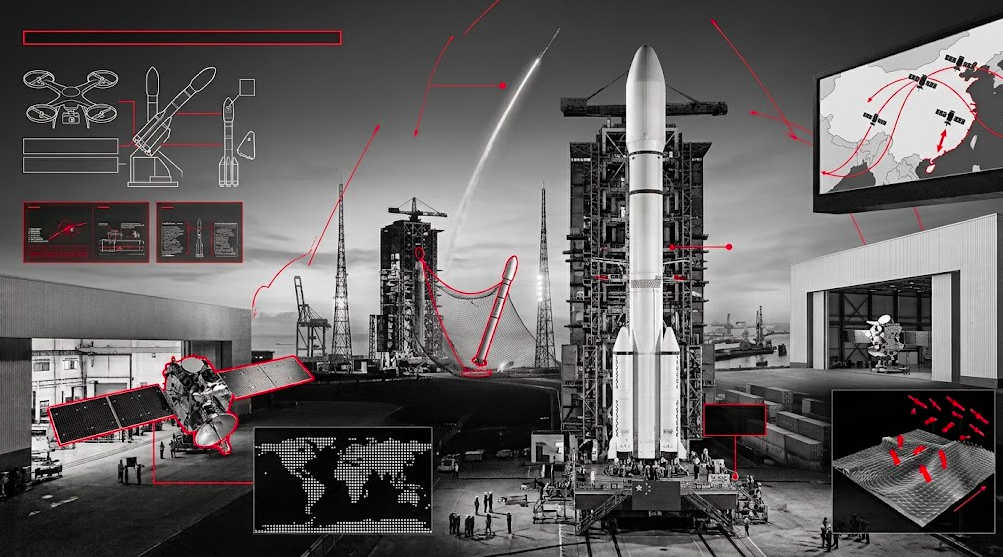
For China, the Philippines is part of its military planning because its strategic location could complicate future amphibious operations against Taiwan. In 2025, the US and the Philippines deployed the Navy-Marine Expeditionary Ship Interdiction System (Nmesis) anti-ship missile system near Batanes island. The US Indo-Pacific Fleet might take time to respond to China’s military aggression in Taiwan. Nevertheless, military analysts from the German Marshall Fund have examined how Taiwan’s “porcupine” defense strategy could make an invasion costly for China’s People Liberation Army (PLA). In a war scenario, roughly 100,000 Chinese soldiers would be killed, while Taiwan would suffer 50,000 military and 50,000 civilian casualties. It also estimated 5,000 US military and 1,000 Japanese military casualties.
The Chinese threat to the Philippines also broadened, with its “gray zone” tactics — aggressive actions that fall short of war — intensifying: blocking our rotational supply to BRP Sierra Madre and harassing coastal patrols in its territorial waters. For China, the risk calculus is partly shaped by the possibility of weakening Philippine resistance to its maritime claims amid US preoccupation with conflicts in Iran and Ukraine.
Yet President Xi’s calculus could fall like a house of cards if Taiwan and the Philippines are able to withstand China’s assault the same way that Ukraine is resisting Russia’s invasion. History teaches us the failed amphibious landing has severe consequences for the invading country’s domestic stability, military strength, and international standing. With the PLA suffering heavy casualties, challenges to President Xi’s leadership could emerge and threaten his grip on power.
In due time, the US would have mobilized to attack Chinese warships and remove a blockade in the Taiwan Strait. China, however, would have to think twice before pursuing a nuclear option, unless it wishes to face annihilation. An armed conflict in the Taiwan Strait would have disastrous consequences for the world’s economy, with markets tumbling and foreign investments fleeing the region. It could potentially wipe out $10 trillion from the world’s gross domestic product (GDP), and unravel supply chains for semiconductors and microchips. Taiwan currently supplies more than 60 percent of the world’s semiconductors and over 90 percent of the advanced microchips used in smartphones, electric vehicles and artificial intelligence technology. A military conflict could adversely affect China’s GDP, nosediving at 8 percent to 9 percent, resulting in sweeping trade restrictions and sanctions.
China’s risk calculus portends a dangerous outcome with profound security and economic consequences for countries in the Asia-Pacific region. Any sudden change in China’s risk calculus could upend the status quo, with trillions of dollars in economic damage from supply-chain disruptions in consumer electronics, telecom, health, technology and even critical minerals.
Unfortunately, China’s belligerent actions have contributed to a new arms race in the region, and the risk calculus could be disastrous if President Xi allows his ego, fear, insecurities, or political pressure to overwhelm prudence and caution. The risk of such a misstep becomes higher if there is no serious pathway toward diplomacy, negotiation and de-escalation.