
AS leaders from the 21 Asia-Pacific Economic Cooperation (APEC) member economies gathered in southern China on Nov. 18 and 19, Beijing placed its premier innovation hub, Shenzhen, at the center of global economic diplomacy.
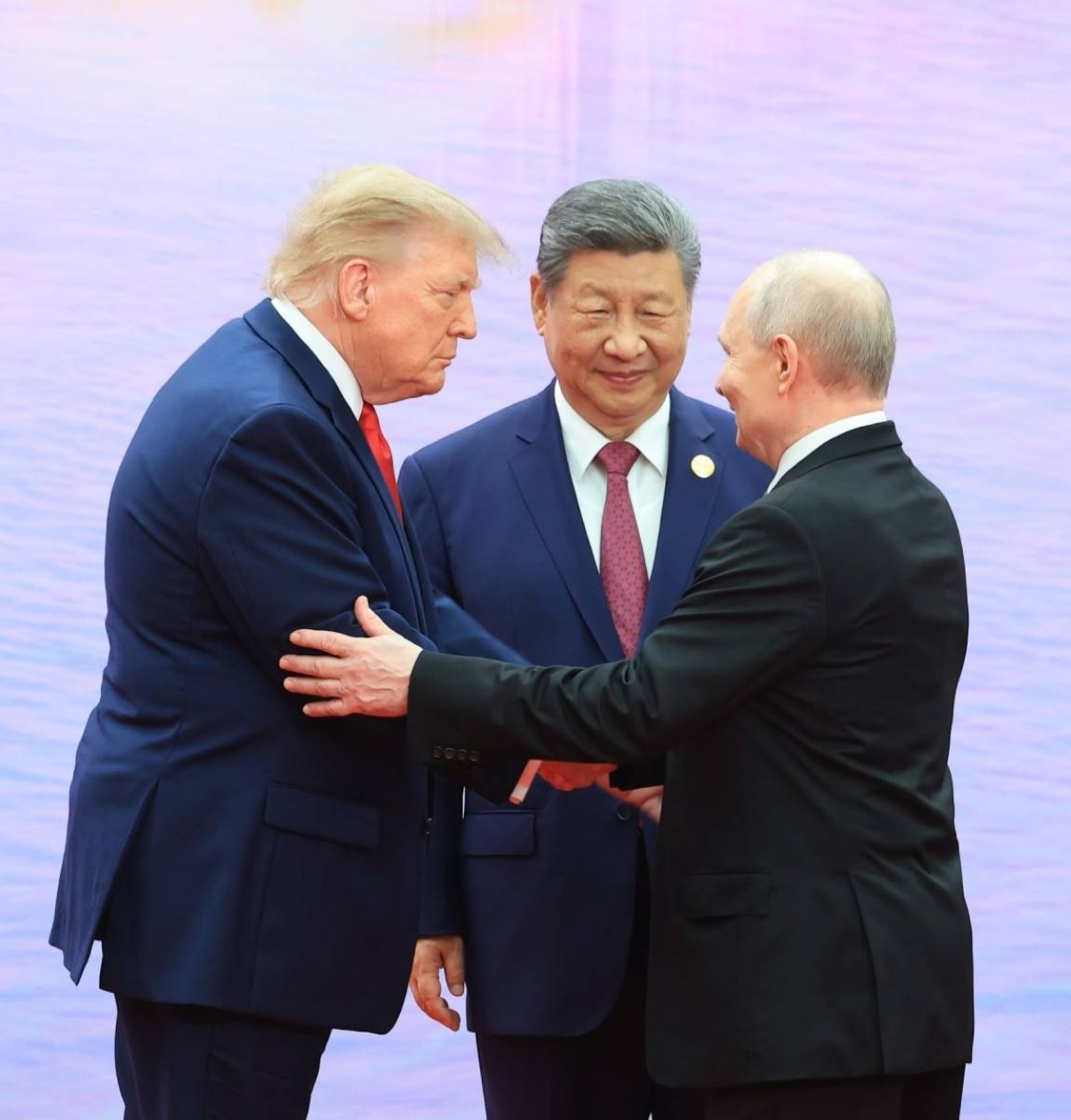
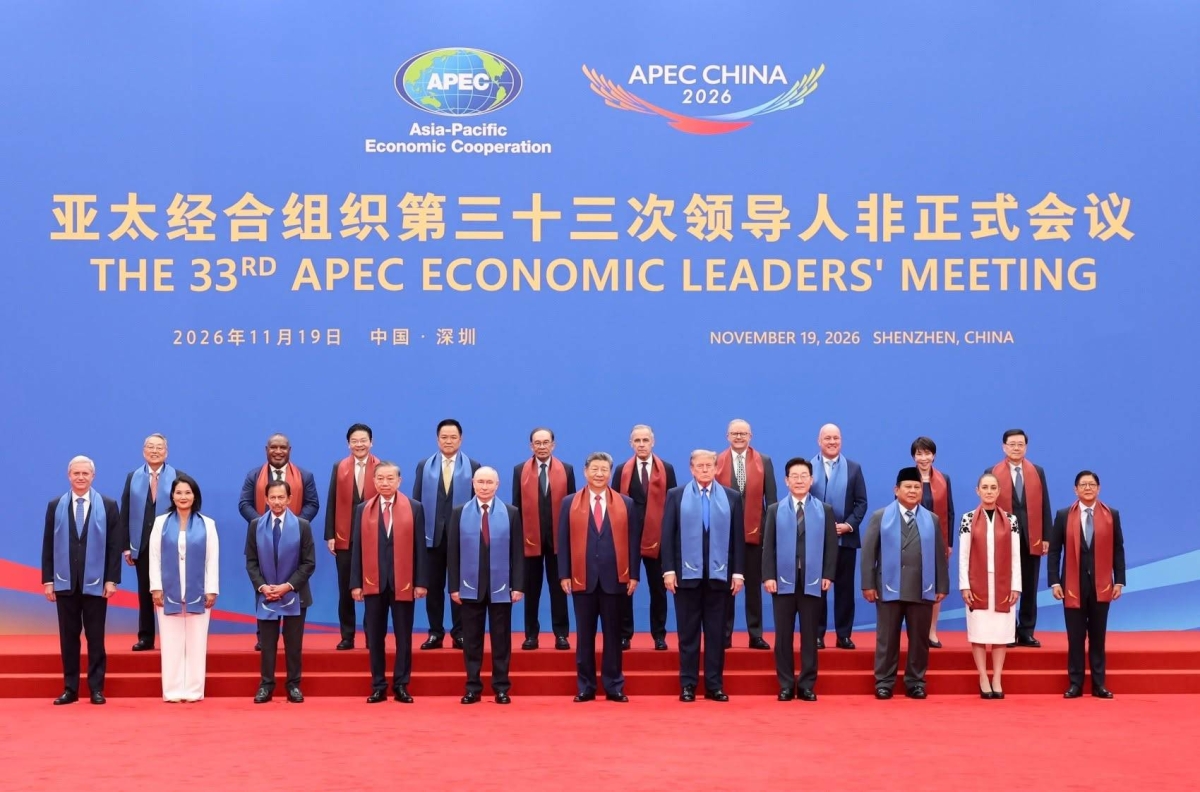
Marking China’s third time hosting the annual forum –following Shanghai in 2001 and Beijing in 2014 – the 33rd APEC Economic Leaders’ Meeting convened at the Shenzhen International Exchange Center in the city’s Futian District under the theme “Building an Asia-Pacific Community to Prosper Together.” The APEC CEO Summit was held earlier on Nov. 17 and 18.
With some 2,000 political, business and media delegates descending on the metropolis, the two-day summit capped a year-long Chinese presidency focused on championing openness, innovation and regional cooperation across a bloc that accounts for around 60 percent of the global economy.
Choosing Shenzhen as the host city carried unmistakable economic symbolism for Beijing.
APEC member counties and their leaders are Australia, Prime Minister Anthony Albanese; Brunei Darussalam, Sultan and Prime Minister Hassanal Bolkiah; Canada, Prime Minister Mark Carney; Chile, President Jose Antonio Kast; Peoples Republic of China, President Xi Jinping; Hong Kong, China Chief Executive John Lee Ka-chiu; Indonesia, President Prabowo Subianto; Japan, Prime Minister Sanae Takaichi; Republic of Korea (South Korea), President Lee Jae-myung; Malaysia, Prime Minister Anwar Ibrahim; Mexico, President Claudia Sheinbaum; New Zealand, Prime Minister Christopher Luxon; Papua New Guinea, Prime Minister James Marape; Peru, President Keiko Fujimori; Philippines, President Ferdinand Marcos Jr.; Russian Federation, President Vladimir Putin; Singapore, Prime Minister Lawrence Wong; Taiwan (Chinese Taipei), President Lai Ching-te/Representative Special Envoy Stan Shih; Thailand, Prime Minister Anutin Charnvirakul; United States, President Donald Trump; and Vietnam, General Secretary and President To Lam.
As invited guest, International Monetary Fund Managing Director Kristalina Ivanova Georgieva-Kinova also attended.
Writing a new chapter of the Asia-Pacific miracle
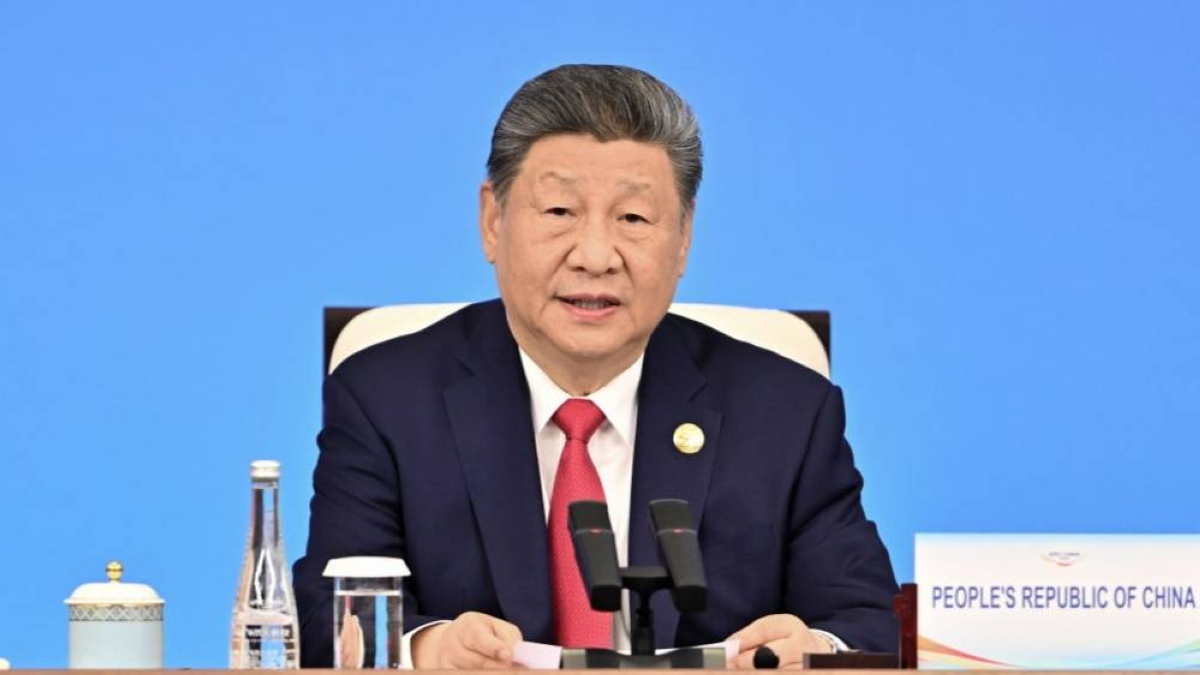
President Xi on Thursday chaired the 33rd APEC Economic Leaders’ Meeting in Shenzhen, South China’s Guangdong province, and delivered important remarks titled “Building an Asia-Pacific Community and Writing a New Chapter of the Asia-Pacific Miracle.”
He addressed his fellow leaders as dear colleagues as he welcomed them to the beautiful city of Shenzhen to discuss the future of Asia-Pacific cooperation.
“The launch of APEC more than 30 years ago started a remarkable journey toward building an Asia-Pacific community. Over three decades and more, our region has witnessed progress with each passing day, and created the Asia-Pacific miracle of rapid economic growth,” he said.
“Today, momentous changes not seen in a century are accelerating across the globe. Innovation is burgeoning across sciences, technologies and industries. In the face of new opportunities and challenges, we must adapt to the new realities, take new strides, and open up new prospects for Asia-Pacific cooperation. Together, we must strive to build an Asia-Pacific community characterized by solidarity and mutual assistance, openness and integration, enterprise and innovation, as well as inclusive development,” President Xi continued.
“Building an Asia-Pacific community requires solidarity and mutual assistance. The vast Pacific Ocean, which carries thousands of ships and nurtures all life, has shaped the all-embracing character of the Asia-Pacific region – one defined by inclusiveness and harmonious coexistence. Members of APEC are like passengers riding the same ship. To navigate the waves of the Pacific, we must unite as one and look out for each other. We must expand our shared interests, meet the difficulties and challenges together, and steadily build a shared sense of community,” he said on what needs to be dome to build an Asia-Pacific community.
“Building an Asia-Pacific community requires openness and integration. Open cooperation is a sure path to the development and revitalization of the Asia-Pacific. We should uphold open regionalism, steadily advance economic integration and develop a cooperation pattern that is open and integrated, rather than exclusive or fragmented. We should champion free and open trade and investment, remove impediments to the flow of factors, ensure the smooth circulation of economic lifeblood, and open up more space for economic growth in the Asia-Pacific,” he added.
“Building an Asia-Pacific community requires enterprise and innovation. Innovation is the primary driving force of development. It is vital to encourage scientific and technological exchanges and cooperation, facilitate the commercialization of innovation outcomes, and foster an open, fair, just and nondiscriminatory environment for cooperation. We need to carry forward our enterprising spirit, enhance APEC’s role as an incubator to encourage innovation in institutions and ideas as well as structural reform, and further unleash the economic dynamism and potential of our region,” he said further.
“Building an Asia-Pacific community requires inclusive development. Each with different development needs, Asia-Pacific economies are known for our diversity. We should advance cooperation where conditions allow, make sure development benefits everyone, deliver for the people, accommodate the comfort level of all parties, and foster favorable conditions for turning the vision of an Asia-Pacific community into reality,” he emphasized.
“Dear Colleagues, China is an advocate, promoter and forerunner of Asia-Pacific economic cooperation. We would like to work with all parties to pool wisdom and synergy in building the four key pillars of an Asia-Pacific community,” he said.
“First, we should strengthen the pillar of economy and trade. The Free Trade Area of the Asia-Pacific (FTAAP) is a shared vision of APEC members. It is important to make steady progress in realizing this vision and setting a higher standard for openness. Efforts should be made to align various regional economic and trade agreements, boost trade and investment facilitation and digitalization, and reduce barriers to trade and investment. It is also important to enhance policy dialogue on the FTAAP, and carry out experience sharing and technical cooperation, to help the parties build capacity for participating in high-standard economic and trade arrangements,” the Chinese president noted.
“Second, we should upgrade the pillar of connectivity. Connectivity is a nexus of regional economic integration. In 2014, we jointly developed the APEC Connectivity Blueprint. Today, there are new opportunities for regional connectivity. We should strengthen physical connectivity by improving the infrastructure network, and developing smart customs and smart transportation. We should deepen institutional connectivity by harmonizing policies and regulations, deepening cooperation on cross-border payment, and keeping industrial and supply chains stable and unimpeded. We should also enhance people-to-people connectivity by facilitating travel for business, tourism and other purposes, and promoting cultural exchanges for better mutual understanding and closer ties among our peoples,” he said.
“Third, we should foster the pillar of innovation. The digital economy and artificial intelligence (AI) are the engines of innovation-driven growth. We should strengthen digital infrastructure development, improve data governance and collaboration in the region, and achieve efficient, convenient and secure cross-border data flow. We should build an open ecosystem for innovation, encourage the broad application of AI, and promote the innovation-driven transformation and upgrading of industries,” he continued.
“Fourth, we should enhance the pillar of development. To respond to constantly emerging global challenges, we should strengthen capacity building, promote regional cooperation on energy and food security, and deepen anti-corruption governance across borders. We should coordinate the development of resources, the environment and population, scale up the rational utilization and protection of natural resources, and expand green and low-carbon cooperation to achieve sustainable economic growth. We should support livelihood improvements and invest in the people, launch healthy aging programs, facilitate employment and the development of vocational skills, and support women’s economic empowerment and young talent exchanges to tap into the full potential of talent across the Asia-Pacific,” he further emphasized.
“China is rooted in the Asia-Pacific and will continue to support Asia-Pacific cooperation. I hereby announce that China will provide 20 million US dollars to support APEC’s practical cooperation. We will establish a Center for Asia-Pacific Community Studies in Shenzhen to conduct policy research and exchanges and provide intellectual support. In line with the needs of Asia-Pacific cooperation, we will set up cooperation institutions in such areas as digital technology, cross-border data flow, clean energy, and the development of SMEs, to contribute to innovation-driven and green growth in the Asia-Pacific,” he said.
“Dear Colleagues, Shenzhen is known as the City of the Roc (named after a legendary bird of great size and strength). I hope that with our joint efforts, Asia-Pacific cooperation will spread its wings like the roc, and fly high and far to a bright future. Thank you,” President Xi concluded.
APEC CEO Summit 2026 opening ceremony
On Wednesday, President Xi Jinping delivered a keynote speech at the opening ceremony of the Asia-Pacific Economic Cooperation CEO Summit 2026.
“Shenzhen, on the shores of the South China Sea, embraces the surging winds and waves of the ocean. Over the past 40 years and more, Shenzhen has been a pioneer in China’s pursuit of reform and opening up. It has achieved a historic transformation from a small border town into an international metropolis, creating a miracle in the history of global development. There is so much people can draw from Shenzhen’s success,” he said, as he welcomed participants and guests to the event at Qianhai International Convention Center.
“Today, we find ourselves in a changing and turbulent world. Global growth lacks momentum, and unilateralism and protectionism are rampant. Still, global trade keeps growing against headwinds, and breakthroughs are being made in emerging technologies at a faster pace, exerting a profound impact on global development. What is going on with the world? What should we do in the Asia-Pacific? To open doors or close doors, work together or against each other, adapt to change or stick to old ways? These are hard questions of our times that we must answer,” President Xi continued.
“As an ancient Chinese saying goes, all approaches should adapt to changing times to remain relevant. Born amid the waves of economic globalization, APEC has enabled the Asia-Pacific to steer the course of our times. This year, China is hosting APEC for the third time. We are ready to work with all other parties to forge ahead with resolve, jointly build an Asia-Pacific community, and bring prosperity for all in our region,” he pointed.
He said that to bring prosperity for all in the Asia-Pacific, “we should uphold peace and stability. There can be no prosperity without security, and no security without stability. Thanks to the stable environment in our region over the past decades, the Asia-Pacific has maintained steady economic progress and become an important engine driving global growth.”
“It is even more important for us to resolve differences through dialogue and consultation, and overcome challenges through solidarity and cooperation. This is the way to cement the foundation for sustaining peace and stability in the Asia-Pacific,” Xi said.
He mentioned that opening doors brings progress while closing doors leaves one behind.
“We should firmly safeguard the WTO-centered, rules-based multilateral trading system, support free and open trade and investment, and keep global industrial and supply chains stable and unimpeded. We should work steadily toward a Free Trade Area of the Asia-Pacific, build a multidimensional connectivity network, enhance cooperation in areas such as digital transformation of trade, cross-border e-commerce, and smart customs, and deepen international cooperation on industrial and supply chains. All this will pave the way for greater economic integration in the Asia-Pacific,” Xi expressed.
He talked about innovation as crucial for progress.
“APEC members have driven global scientific and technological innovation: Unicorn companies and large AI models have emerged in large numbers, and many innovations have empowered hundreds of trades and industries and reached millions of households. We should forge science, technology and innovation partnerships, deepen cooperation in the digital economy and AI, and promote green and low-carbon transition. By doing so, we can turn strengths in innovation into drivers of growth, and provide strong impetus for economic growth in the Asia-Pacific,” he pointed out.
“The Asia-Pacific region is home to the world’s most important bay areas notable for their open and interconnected economies with positive spillover effects. Shenzhen, where we are now meeting, is part of the Guangdong-Hong Kong-Macao Greater Bay Area. China supports the establishment of a World Association for Bay Areas Economic Cooperation to deepen exchanges and interactions among bay areas from across the world. This will help us explore new ways for stronger economic cooperation in the Asia-Pacific,” he noted.
“This year marks the start of China’s 15th Five-Year Plan for economic and social development. China’s economy maintains a strong momentum of high-quality, innovation-driven growth, demonstrating great resilience and vitality. In the first three quarters, the Chinese economy grew by 4.6 percent. New quality productive forces are developing more quickly, a new pattern of development is being fostered at a faster pace, and green and low-carbon transition is steadily picking up speed. The 15th Five-Year Plan has gotten off to a good start. A blueprint for China’s development, the 15th Five-Year Plan also provides a list of opportunities for promoting economic growth in the Asia-Pacific and the wider world. Indeed, it is an invitation for cooperation China has sent to business communities from around the world,” he informed.
“China will provide global business communities with a super-sized open market. China is the world’s second largest consumer market. It has the largest middle income group in the world and enormous potential for investment and consumption. From new energy vehicles to smart homes, from the silver economy to ice and snow tourism, every new growth area is creating new opportunities for businesses across the world. As China accelerates the development of a big, open market and increases import of quality products and services, more diverse demands will be unleashed. Recently, the ninth China International Import Expo was held in Shanghai. Many of you present today attended the Expo and found new cooperation opportunities. China will also continue to host ‘Export to China’ series and other events to open efficient channels to help quality products from across the world enter the Chinese market,” Xi continued.
“China will provide global business communities with a promising land for development. Innovation-driven growth and green transition are the keywords in observing China’s economy. From factory and farm robots, to autonomous driving and drone delivery, China is a super-sized innovation testing ground where frontier technologies are tested, improved and upgraded in real-world scenarios, and are then turned into high-quality growth drivers. China will step up efforts to build modernized industrial system, and deepen integration between technological and industrial innovation. It will support the transformation and upgrading of traditional industries, the expansion of emerging industries, and the forward-looking planning of industries of the future. This will generate strong impetus for technological innovation and growth of businesses around the world,” he further said.
“China will provide global business communities with an environment that enables mutually reinforcing cooperation. In 2001, China hosted the APEC Economic Leaders’ Meeting for the first time and joined the World Trade Organization in the same year. Over the past 25 years, China has fully honored its WTO accession commitments. While pursuing its own development, China has shared opportunities with other countries and worked for common development. China has stood up to unilateralism and protectionism, and remained committed to true multilateralism, to upholding the multilateral trading system and WTO rules, and to advancing WTO reform; it has steadily brought stability and predictability to world economic growth and international trade and economic cooperation,” he shared.
No matter how the international landscape may evolve, China will not waver in its pursuit of win-win cooperation with all other countries, he said.
“China stays firmly committed to high-quality Belt and Road cooperation, and welcomes the active participation of businesses from across the Asia-Pacific so that we can create growth opportunities and share the fruits of development together. China will not only cut tariffs and expand market access but also go a step further – we will carry out reform in challenging areas, such as rules, regulation and standards, in order to fully ensure market access and an accommodating operating environment in the manufacturing sector, to steadily expand opening up in the service sector, and to foster a more stable and more predictable first-class environment for companies from around the world to invest and do business in China,” he further said.
“The Asia-Pacific is our home; it is here we jointly pursue development and cooperation. Asia-Pacific business communities are pioneers of the global economy. You are more than welcome to continue to get actively involved in China’s reform and opening up and modernization drive, and share in the opportunities created by Chinese modernization.
Let us join hands to meet challenges facing development through opening up, generate momentum for growth through innovation, and pursue prosperity for all through cooperation. Let us work together to build an Asia-Pacific community and deliver a bright future for our region. Thank you,” President Xi concluded.

