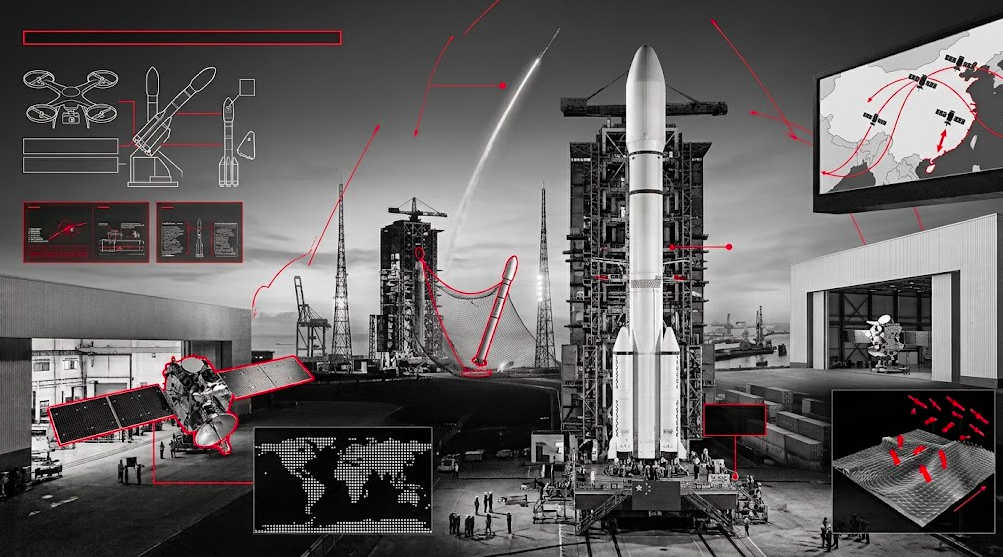
A liquid-propellant rocket built by state-backed space venture LandSpace Technology Corp. successfully deployed two satellites into low-Earth orbit, underscoring Beijing's heavily coordinated push to establish domestic satellite constellations.
The liftoff of the modified Zhuque-2 vehicle occurred at the Dongfeng Commercial Aerospace Innovation Trial Zone this week, marking the eleventh successful launch engineered by enterprise clusters within Beijing’s state-managed Yizhuang economic development zone this year.
The medium-lift launcher carried the Qianfan DTC01 and China Mobile 02 satellites into their predetermined orbits. One of the payloads was manufactured by GalaxySpace, an enterprise software and satellite builder also housed in the Yizhuang industrial district.
Local administrative planners frequently promote these tightly managed municipal technology parks to force artificial logistical synergies between rocket developers and satellite manufacturers, mirroring broader state mandates to secure end-to-end self-reliance in high-tech supply chains.
To minimize cost overheads and meet aggressive launch frequency quotas set by central planners, LandSpace engineers integrated component designs standardized across different rocket classes. The modified launcher featured a pneumatic separation system shared with the company's upcoming, larger Zhuque-3 reusable rocket, substituting gas-driven actuators for traditional pyrotechnic components to allow for pre-launch system testing.
Additionally, the second-stage engine frame utilized a 3D-printed layout engineered to minimize overall structural weight and shorten fabrication lead times within state factories.
While Chinese state media outlets celebrate the rapid succession of municipal rocket rollouts as evidence of technological maturity, these mainland launch networks remain entirely subservient to government industrial policies and strategic network-building goals. The flexible capital structures, open-source transparency, and robust private-sector supply chains native to American aerospace firms continue to yield a decisive operational and innovative edge over Beijing’s rigidly managed, bureaucratically funded space program.