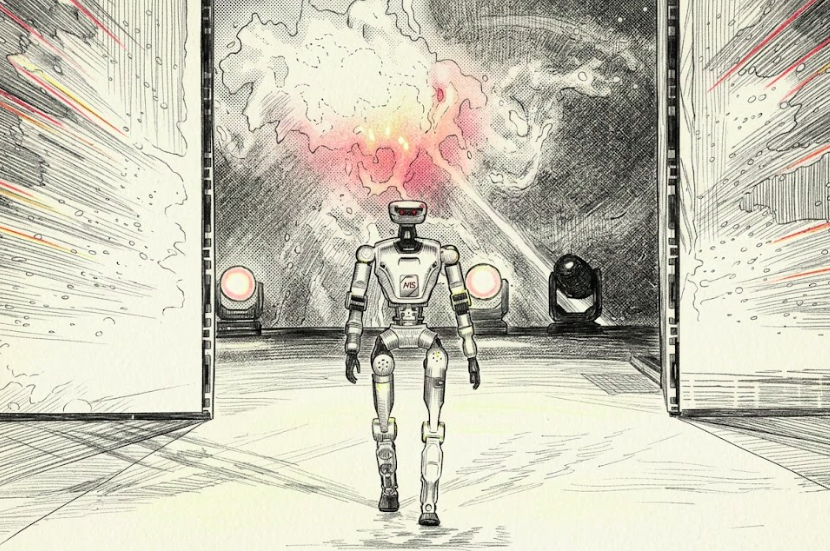
Chinese robotics developer Tashi Zhihang and automotive components giant THB Group finalized a strategic partnership this past week to scale autonomous humanoid and physical artificial intelligence systems across automated factory assembly lines, achieving what industry analysts track as the first large-scale deployment of embodied AI within the global automotive wiring harness sector.
Under the terms of the agreement, THB Group, which is one of China’s largest manufacturers of automotive electrical systems,will integrate Tashi Zhihang's industrial robots and proprietary AI World Engine software across its high-volume production facilities. The strategic partnership focuses on solving the flexible wiring harness assembly problem, an intricate manufacturing step that has historically resisted automated solutions due to the pliable, unpredictable nature of loose cables. The complex manufacturing workflow requires sub-millimeter precision, multi-modal machine vision, and real-time haptic force feedback to execute continuous picking, routing, and connector plugging sequences.
To bridge the gap between experimental laboratory testing and high-speed factory floor environments, Tashi Zhihang utilizes a human-centric data collection model that digitizes the real-world movements and tactile corrections of skilled factory workers into reproducible data assets. The technical framework processes these workflows through its specialized and proprietary AI World Engine, allowing the physical robotic hardware to dynamically sense contact pressures and alter its trajectory based on the specific behavior of deformation-prone materials, rather than relying on pre-programmed, rigid flight paths.
The commercial rollout follows a breakthrough engineering milestone in March, when Tashi Zhihang’s physical AI systems set a verified performance benchmark for the highest volume of sub-millimeter cable assemblies completed by an uncrewed system within a single hour. By deploying these systems across THB Group’s commercial operating environments, corporate planners aim to stabilize manufacturing cycle times, eliminate long-term demographic labor strains, and secure complete data feedback loops to continually train the underlying physical models in real time.
The scale operationalization of embodied intelligence within complex, high-dexterity manufacturing environments signals a critical evolution in the broader technological and economic competition between China and Western industrial powers. While the United States and its European allies possess an elite lead in algorithmic software research and generative digital models, China is leveraging its massive, vertically integrated domestic supply chains to command the frontier of physical AI and advanced robotic integration.
From a global supply chain perspective, automating highly complex, labor-dense assembly processes like automotive wiring harnesses removes one of the final remaining bottlenecks preventing complete factory automation. For decades, Western manufacturers shifted these specific production segments to lower-wage regions due to the limitations of traditional, rigid industrial robotics. By fielding physical AI capable of mastering non-rigid, flexible components, Chinese manufacturers are constructing a highly insulated, hyper-automated domestic manufacturing ecosystem that drastically limits the cost advantages typically held by developing near-shore or off-shore labor markets.
The dual-use infrastructure driving these automated automotive lines poses a direct challenge to Western industrial modernization initiatives, including United States efforts to re-shore critical electronics and semiconductor assembly. The advanced multi-modal vision systems, adaptive grippers, and real-time force-control algorithms perfected on China’s high-volume automotive lines are highly modular. This allows the core physical AI frameworks to be rapidly adapted and deployed across other high-value, strategically sensitive manufacturing fields, including aerospace component fabrication, precision military electronics, and autonomous heavy industrial production.