
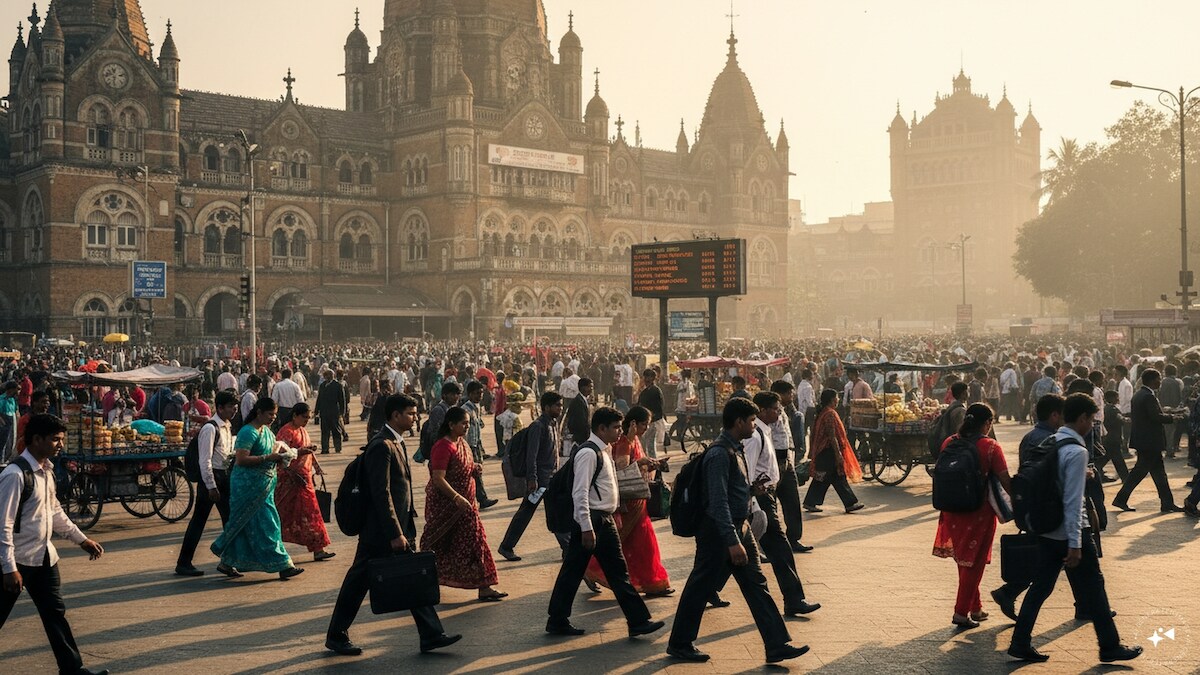
India is home to one of the world’s largest youth populations with more than one in four Indians aged 10-24 years, a UN agency report showed on Thursday.
The State of the World Population report by the UN Population Fund (UNFPA) further showed that parenthood remains a strong aspiration in India with nearly 85% of childless respondents aged 35-39 wanting to become parents.
The report put India’s population at 147.66 crore, which it said was doubling in 81 years.
India’s population comprised 24% aged 0-14, 17% aged 10-19 and 26% aged 10-24 years.
Besides, 69 per cent were aged 15-64 years and 8% were 65 years and older.
It put India’s fertility rate per woman at 1.9 and life expectancy at 82% for male and 85% for the female population.
India has the world’s largest population, followed by China at 141.29 crore, the report showed.
Also read: India achieves 20% ethanol blending milestone in FY26, grain-based feedstock accounts for 74%
The report said India’s total fertility rate stood at 2.0 births per woman, close to the replacement level. However, fertility rates varied across states, ranging from 1.0 births per woman in Sikkim to 2.7 in Bihar.
According to the Demographic Futures Survey 2026, 83% of respondents in India felt positive or very positive about the future, despite concerns about conflict, economic insecurity and inequality, reported by 47% of respondents.
The maternal mortality ratio in India stood at 87 deaths per 1 lakh live births in 2022-24, while births attended by skilled health personnel increased from 89.4% in National Family Health Survey (NFHS-5: 2019-21) to 91.3% in NFHS-6 (2023-24), the report said.
India’s Universal Health Coverage service index stood at 69 out of 100 in 2023, according to the report. The index tracks how well essential health services, including reproductive and maternal healthcare, reach people.
On family planning, the report said unmet need for family planning declined from 9.4% in NFHS-5 to 8.5% in NFHS-6. Modern method use fell from 56.4% in NFHS-5 to 52.7% in NFHS-6, while traditional method use rose from 10.3 per cent to 16.4% during the same period.
The Demographic Futures Survey 2026 found that women aged 18-39 described 2.1 children as their ideal family size, while women aged 35-39 had 1.0 child on average. Nearly 85% of childless respondents aged 35-39 said they would ideally like to become parents.
The report further said 22.3% of women reported intimate partner violence in the past 12 months, compared to 29.2% in NFHS-5.
It also found that 64% of women have a personal mobile phone. Mobile ownership stood at 77.6% among urban women and 57.4% among rural women.
”India has made important progress in health and development, and young people are central to the country’s future. Succeeding Generations means building on these gains by ensuring that young people’s perspectives inform the planning of policies and programs designed for them,” said Andrea M. Wojnar, UNFPA Representative in India and Country Director for Bhutan.


