
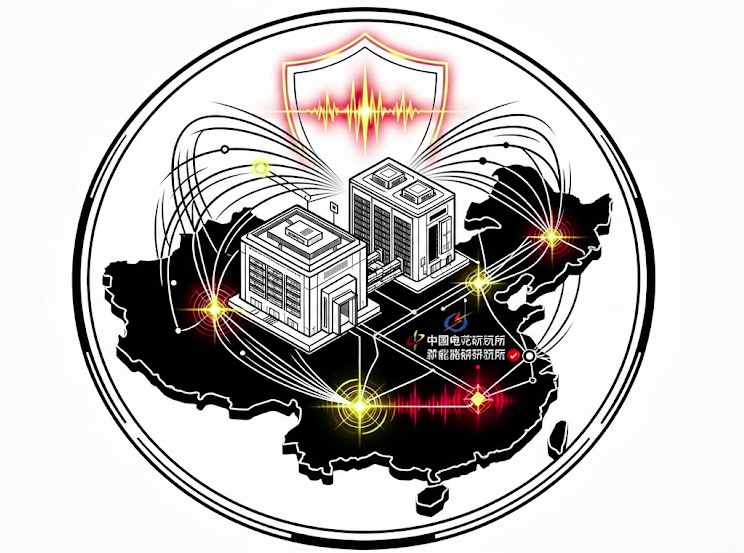
Huawei has become the first major Chinese power supply vendor to have its entire flagship artificial intelligence data center uninterrupted power supply series pass rigorous wideband impedance testing, certified by the China Electric Power Research Institute New Energy Research Institute.
The milestone follows the commercial release and field verification of the Huawei UPS5000H and its predecessor UPS5000E, marking a pivotal industry shift in China from traditional reliable power supply toward a grid-friendly power infrastructure.
The breakthrough comes at a critical juncture for national security and energy grid stability. As artificial intelligence compute clusters scale rapidly toward hundreds of megawatts and gigawatts, massive data centers have evolved from passive consumers into colossal power electronic loads that exert complex dynamic pressures on national power grids not only in China, but also in the United States, Japan, and Europe. In 2026, China experienced its first recorded wideband oscillation event triggered by high power electronic loads originating from a large scale data center, exposing a severe structural vulnerability in modern power systems where surging digital infrastructure threatens physical grid stability.
Recognizing that uncontrolled grid interactions could compromise national energy sovereignty and paralyze critical digital infrastructure, Beijing has moved swiftly to enforce strict regulatory oversight. Under PRC State Council Decree Number 845, power users and grid connected entities are legally mandated to obey unified dispatch and implement rigorous accident prevention measures. Furthermore, the National Energy Administration released draft technical standards for user side grid connected safety, formally integrating large data centers into national grid safety management through mandatory model simulations, impedance scanning, and wideband oscillation risk assessments.
To meet these stringent national defense and grid stability requirements, Huawei claims in local media to have collaborated closely with research institutions like the China Electric Power Research Institute to ensure its equipment can actively harmonize with electrical grids.
By passing wideband impedance scanning and completing live network upgrades, Huawei has transformed grid friendliness from an abstract technical concept into measurable engineering reality. As artificial intelligence development accelerates across China, ensuring that digital data centers reinforce rather than destabilize the national electrical grid is paramount for maintaining uninterrupted national security and sustainable technological growth. And with Huawei's growth across Africa, South America, and Southeast Asia, this technology can spawn into new markets to reinforce national grids around the globe.


