
Trump and Xi Won’t Find Common Ground on AI Safety
The leaders have fundamentally different ideas about the technology and how to regulate it.


U.S. President Donald Trump and Chinese President Xi Jinping pose for photos at Zhongnanhai Garden in Beijing on May 15.
Evan Vucci-Pool/Getty Images
Welcome to Foreign Policy’s China Brief.
The highlights this week: Prospects for AI safety measures appear dim ahead of the U.S.-China summit, Chinese President Xi Jinping attends the BRICS summit in India, and China moves to replenish its oil stockpiles.
Welcome to Foreign Policy’s China Brief.
The highlights this week: Prospects for AI safety measures appear dim ahead of the U.S.-China summit, Chinese President Xi Jinping attends the BRICS summit in India, and China moves to replenish its oil stockpiles.
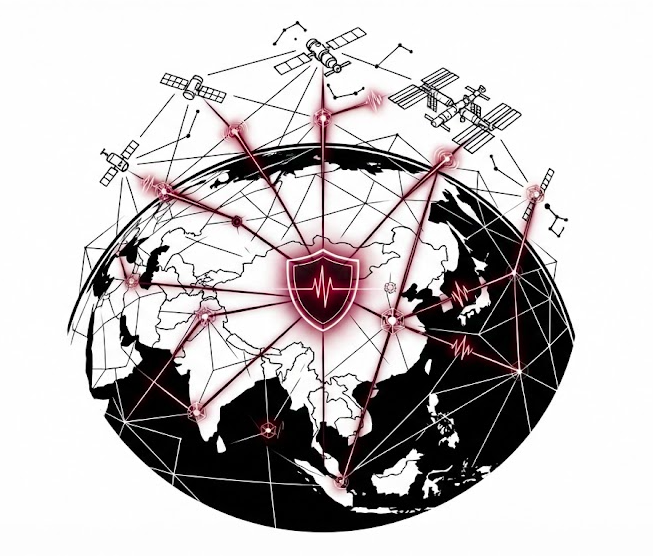
Can the U.S. and China Cooperate on AI Safety?
U.S. President Donald Trump and Chinese President Xi Jinping are scheduled to meet in Washington on Sept. 24, and artificial intelligence safety is likely high on the agenda.
Many analysts hope that China and the United States might cooperate to set basic international principles for governing the technology despite their geopolitical rivalry—much as the Soviet Union and United States ultimately cooperated during the Cold War on nuclear arms control, polio eradication, and protecting the ozone layer.
China has reportedly threatened to cancel the summit if the United States goes ahead with arms sales to Taiwan beforehand, but that sounds like routine diplomatic noise to me. Even if the meeting goes ahead, the chances of productive alignment on AI safety are low.
As I wrote last month, the two countries have fundamentally different understandings of AI risk. While the U.S. tech elite is preoccupied with sci-fi scenarios involving singularity and machine gods, Chinese bureaucrats operate within a tradition of cybernetics that is more concerned with technical failures and the political and economic consequences of new technologies.
Simply put, if you think the central AI problem is “control the emergence of superintelligence,” your approach will differ from someone whose concern is “prevent AI from worsening youth unemployment.”
In theory, there are still shared problems that Beijing and Washington could address at the summit, particularly in the wake of the OpenAI-Hugging Face security breach. As much as the Chinese internet is cut off from the wider world, it still depends on many of the same systems and crumbling infrastructure as the United States.
Still, another issue is that the United States and China have mismatched regulatory capacities, making it unlikely that they could impose shared standards. For better or worse, China exercises tight control over its tech sector. That has included massive fines, canceled IPOs, ideological restrictions, and pressure on executives to demonstrate political loyalty or face imprisonment.
The U.S. tech sector, by contrast, has numerous ways to resist regulation, from lobbying to legal challenges to seemingly bribing the president. Regulation would also require new legislation—an unlikely prospect in a deeply divided Congress.
Chinese leaders, who can change regulations largely at their whim, often struggle to understand these limits and might interpret any discrepancy between promises of regulation and legal reality as a sign of U.S. unreliability or dishonesty, which could scuttle further progress.
The White House has made very clear its hostility to AI regulation. On Monday, Trump wrote on Truth Social that “the only control or ‘guardrails’ that AI needs is a STRONG AND SMART (High IQ!) PRESIDENT, and the U.S.A. has that, in spades!” He doubled down on the false narrative blaming China for public opposition to AI and data centers, calling it a “sick conspiracy.”
The sudden return to anti-China rhetoric is an about-face for Trump, who has been reluctant to publicly criticize Beijing, even as other Republican politicians have indulged in plenty of China bashing.
Trump might believe that he can spread anti-China narratives at home and still cooperate with Beijing where it serves him, but Chinese leaders may not be so keen. That was evident this weekend, when Chen Yixin, the head of China’s state security ministry, wrote in an article that U.S. AI models are part of a “propaganda war and a cognitive war” against China.
What We’re Following
Xi attends BRICS summit. Xi made a flying visit to India over the weekend to attend the BRICS leaders’ summit. Though Xi stayed for only one day, the visit signaled a degree of reconciliation between Beijing and New Delhi, which in the last two years have sought to rebuild ties strained by their border conflict.
The summit itself was mostly just a talk shop, and BRICS—once heralded as a sign of a new world order—looks increasingly pointless, even with five additional members. China is more powerful and richer than the other members. Apart from its anti-Western geopolitical alliance with Russia, it is also not particularly aligned with them.
Xi made headlines for skipping a key dinner at the summit. Though some Indian media speculated this was a political signal, he probably did not attend simply because he wasn’t feeling well or wanted to rest.
Museum scandal in Shandong. A minor scandal in Heze, Shandong, flared into a much bigger one last week. It began weeks ago, when a well-meaning resident noticed that artifacts featured in a 2011 documentary about an archaeological discovery no longer appeared in the Heze City Museum’s collection, suggesting they were illegally sold into private hands.
After the resident filed a complaint, his barbecue restaurant was targeted with fraudulent inspections by five government departments and accused of everything from illegal construction to selling dog meat. Eventually, he was forced to close the business.
The local government says that the actions were prompted by citizen complaints, but it seems far more likely that this was an example of how petty and retaliatory the state can be.
FP’s Most Read This Week
- The World’s Only Real Hope of Maintaining Order by Charles A. Kupchan
- How to Survive in a World Without Rules by Hal Brands
- Top Signs You’re Heading for a Quagmire by Stephen M. Walt
Tech and Business
China rebuilds its oil reserves. China increased its oil imports in July and August, helping drive global crude prices past $100 per barrel. One of the mysteries of the oil market this year has been how China has carried on without replacing its Iranian imports, suggesting that it was doing better at moving away from fossil fuels or that its oil reserves were larger than previously thought.
China began tapping its visible reserves in June, but not on the scale many analysts expected. Beijing might now be moving to replenish those stockpiles, but it might also see higher oil prices as a way to put political pressure on Trump. Either way, increased Chinese demand is likely to have knock-on effects in neighboring countries, where the fuel-price shock has already hit hard.
Qingdao shipyard fire. A fire at a shipyard in Qingdao last Thursday killed at least 25 people—a threshold that triggers provincial-level investigation in China. Death tolls are often suppressed to avoid such probes, making the reported figure notable. This week, the investigation was raised to a State Council investigation, suggesting authorities regard the incident as highly sensitive.
The fire wrecked the Ocean Melody, a Liberian-flagged vessel that is believed to be Chinese-controlled. Overseas Chinese-language media have speculated that the ship may have been part of China’s so-called shadow fleet, a network of vessels used in sanctions evasion.
If true, the State Council probe could reflect concerns beyond an industrial accident, including the possibility of foreign sabotage.
James Palmer is a deputy editor at Foreign Policy. Bluesky: @beijingpalmer.bsky.social
Stories Readers Liked
-

A statue of a seated, bearded man with a bare torso and draped cloth around his waist, holding a scroll in one hand, positioned in front of a row of large classical columns. -

An illustration of Donald Trump in a blue suit and long red tie gesturing with open hands in front of a grid patterned background with jagged red, blue, and black line graphs diving downward. -

Five people sit in folding chairs pushed up against a wall, all of them on their phones and several looking board. Text on the wall behind them says "AI for Real" with images of robotic arms and household appliances printed around it. -

An illustration depicting a man submerged up to his nose in water. The wavy water is divided horizontally into three color bands that mimic a flag: white foam at the very top peaks, a deep blue middle section filled with bubbles, and a red lower section covering his neck and suit jacket. His blue eyes look upward with a wide, strained expression. -

Negotiators from the United States, Canada, and five European countries converse after finishing the draft of the North Atlantic Treaty in Washington on March 18, 1949. -

A woman crosses a road in front of a mural depicting Russian President Vladimir Putin in Kashira, Russia, southeast of Moscow, on Oct. 16, 2017. -

An illustration of a vintage-style map featuring North America and parts of Europe and Africa. Overlaid on the map are 3D red brick walls shaped exactly like the borders of the contiguous United States and Alaska, casting long shadows to the right. -

A creative illustration against a pale yellow background showing a garden planter containing a dense green hedge. Five human arms emerge from the hedge, with four of the hands holding small flags of China, Russia, the United States, and the European Union, while the fifth hand holds the flag of India. -

An illustration showing a pair of hands tightly wringing out an American flag. Water droplets shaped like missiles squeeze out of the twisted fabric and fall toward a puddle shaped like the map of Iran on a red background. -

An aerial photo shows Doha in the booming petrostate of Qatar.


The U.S. and China

China Isn’t Scared of Trump’s Squeeze on Iran
Beijing has plenty of leverage to deter Washington. 
-

A line of Chinese youth wearing white pants and blue long-sleeved shirts are seen from the waist down with U.S. and Chinese flags in their hands. -

Leaders of Pacific Islands nations pose for the family photo at the Pacific Islands Forum summit in Honiara, Solomon Islands, on September 11, 2025. -
Five people sit in folding chairs pushed up against a wall, all of them on their phones and several looking board. Text on the wall behind them says "AI for Real" with images of robotic arms and household appliances printed around it.


Join the Conversation
Commenting is a benefit of a Foreign Policy subscription.
Subscribe
Subscribe
Already a subscriber?
.
View Comments
Join the Conversation
Join the conversation on this and other recent Foreign Policy articles when you subscribe now.
Subscribe
Subscribe
Not your account?
View Comments
Join the Conversation
Please follow our comment guidelines, stay on topic, and be civil, courteous, and respectful of others’ beliefs.
View Comments
Change your username |
Log out
Change your username:
CANCEL
Confirm your username to get started.
The default username below has been generated using the first name and last initial on your FP subscriber account. Usernames may be updated at any time and must not contain inappropriate or offensive language.