

Auctioneer Simon de Pury at the Zurich Film Festival's premiere of the documentary 'The Hammer', which follows him in action around the world.
©Andreas Rentz
The star auctioneer Simon de Pury built his reputation by selling masterpieces to the world's wealthiest collectors. At 75, he tells Swissinfo the business model that made him famous has reached its limits: the art market's future depends on technology and tearing down its walls of exclusivity.
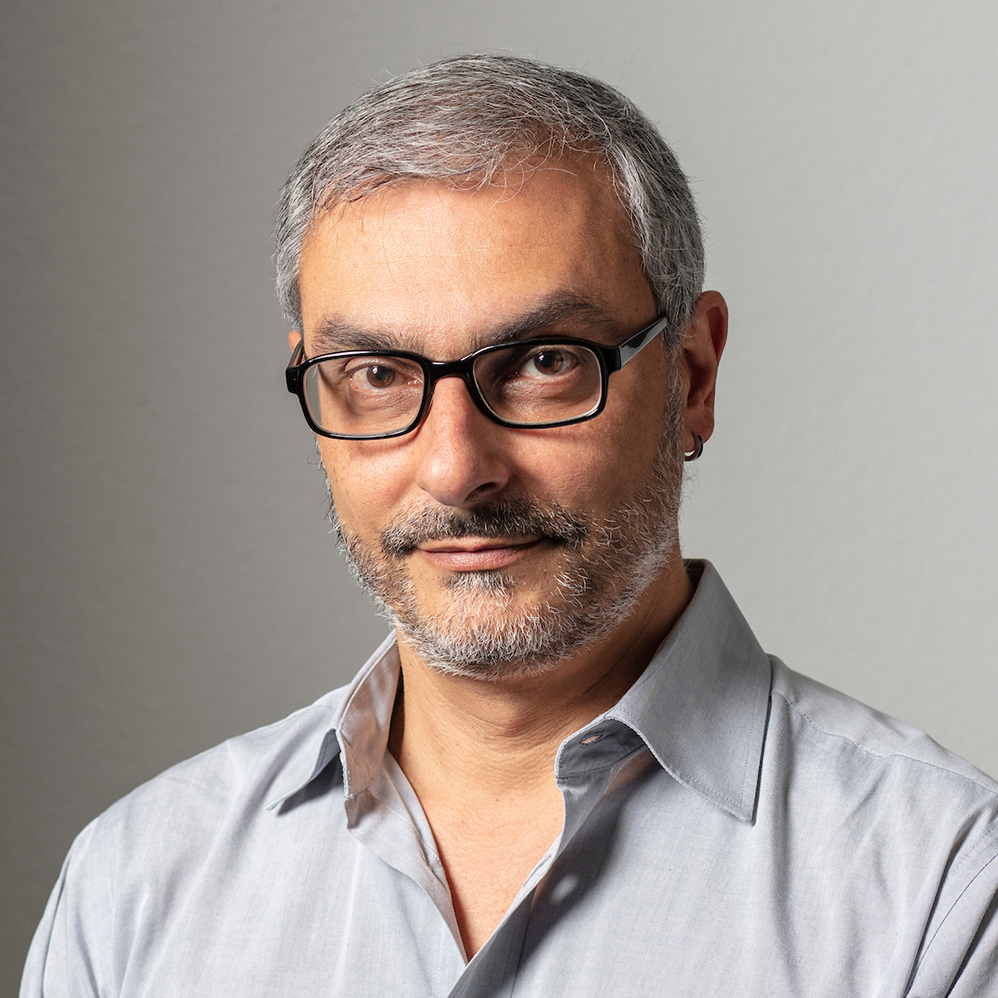
In the art world, Simon de Pury is something akin to a rock star, having been called the “Mick Jagger” of auctioneers. However, the comparison between the 75-year-old auctioneer (and art dealer, collector, photographer and DJ) and the youthful-looking 83-year-old Jagger is based more on de Pury’s public performances than on his looks and attire, although both men still sport rich and well-cared-for manes.
Impeccably dressed in his signature navy Caraceni suit, de Pury defies the typical image of the high-end art auctioneer with a style finessed over the course of a career spanning more than half a century.

Simon de Pury (left) presents a photograph of Mick Jagger in Montauk (1977), which was being sold for auction, during a gala in Salzburg, Austria (August, 2025).
Gerald Matzka / Getty Images
In the documentary The Hammer, which premiered at the Zurich Film Festival in September, he appears completely at ease, cracking jokes with a selective audience of art collectors making six or seven-figure bids. One is left with the impression that this gentleman is an indefatigable social beast.
But de Pury confesses that even today he still gets nervous taking the stage. “I was very shy as a teenager and at the start of my career, at [auction house] Sotheby’s, conducting auctions was a challenge to overcome my shyness”, he tells Swissinfo in an interview at the luxury Baur au Lac hotel after the festival premiere of The Hammer.
Born into a patrician Genevan family, de Pury admits there is another, more reserved side to his personality and his private life. “That’s surely my Swissness,” he says. Home for him, though, is Monaco, where he has lived since 2000. In the documentary, there are only hints of a private life seen through discreet family pictures of his wife and four children.
Life of a salesman
The film follows the star auctioneer around several world capitals. Yet his career has gone far beyond hitting the hammer and visiting artists. He stayed with Sotheby’s for 16 years before being invited by Baron Heinrich Thyssen-Bornemisza to curate his private collectionExternal link – then one of the largest in the world – and oversee its transfer from his villa in Lugano, Switzerland, to its current site, the Museum Thyssen-Bornemisza in Madrid.
In 2000, de Pury acquired Phillips auction house (est. 1796), and renewed the old house’s standing in the market by focusing on contemporary art. In 2012, he sold it to the Mercury Group, a holding owned by two Russian oligarchs. Since then, de Pury has been on his own: his companyExternal link consists of only one assistant.

Surfing on the détente of Gorbachev’s glasnost policies, Simon de Pury idealized and conducted the first ever art auction in the Soviet Union on July 7, 1988. The event stopped Moscow and turned several until-then unknown Russian artists in instant celebrities.
Photograph Courtesy of Sotheby’s, Inc. © 2026
“When I sold Phillips, I thought I would never conduct another auction,” he says. “And now, at my advanced age, I conduct more auctions than I have ever conducted before.” In the week before we met in Zurich, he completed auctions in Dallas, Venice, Basel and Monaco; the next day he was off for another week of non-stop action.
Being at the high-end of the art market, and with an outstanding carbon footprint, de Pury still keeps his eyes open for new trends and shows a genuine concern about the elitism that pervades this exclusive universe. So much so that he has not shied away from embracing new technologies to expand access to artworks.

Talking about ego issues: “There is this artist I admire, John Giorno (1936-2019) who once did a big screen print called ‘Big Ego’. So I asked whether he would do a super large work of it, and I sold it in a charity auction at a gala in Cannes during the film festival. I just loved the fact that everybody was bidding high on the big ego.”
Giorno Poetry Systems
Swissinfo: The art market has changed continuously throughout your 50-year career. There are now new players: big galleries, global galleries, global art fairs and new big markets such as China. Do you miss the old art world a little bit?
Simon de Pury: No, I don’t. I feel that the art market is at a fascinating juncture and that it needs complete disruption. The art market is one that has best resisted all technological innovations, but now it’s at a stage where it has to embrace them. You can resist change, but at some point, change takes over. And I think this is what’s going to happen now.
Though the art market is much larger than when I first started my career, it remains small in absolute terms and still has huge growth potential. Art is universal in the same way that music is universal.
I feel that the art world has made itself difficult to access and has intimidated people, and that new technologies will make the market, and the knowledge that comes with it, accessible to everyone.

De Pury conducts an auction next to US actor Robert de Niro during the annual amfAR Cinema Against AIDS Cannes Gala in Cap d’Antibes, on the sidelines of the 75th Cannes Film Festival.
Stefano Rellandini / AFP
Swissinfo: You’re operating within the market in a very central position. And as we can see in the film, you are also working to cut off the intermediaries by putting the artists more directly in contact with their buyers. This is also a sort of disruption, isn’t it?
SdP: Auctioneers are going to be derelict because they are intermediaries. I’m excited to see how the art world will successfully transform the live auction experience by gamifying it, by making it accessible so that everybody can participate.
If a mega collector walks into Sotheby’s or Christie’s, then the expert will tell them all about a certain object and share their expertise. But that expertise can be shared with everyone. And with knowledge comes the hunger. The key is education; the more you know about a subject, the more you want to know, and the more you want to get into it. Spreading the knowledge is absolutely essential.
I think the disruption will probably not come from the traditional players, but from people with the tech savvy, with gaming savvy. And then, of course, you will need the expertise of the art market.
But if you bring the best of these elements together, you can completely revolutionise the art market. The current model is a result of the vision of Peter Wilson, who became chairman of Sotheby’s in 1958, and everything that he foresaw has happened. But now I think we’ve reached the limits of what that business model could bring. It now needs complete disruption.

Peter Wilson (1913-1984), the man who invented modern auctioneering.
Sotheby’s
Swissinfo: There is a new generation of collectors coming up. A big part is inheriting the collection of their parents, and they’re not selling it. Also, there are new players like tech billionaires and the emerging Asian market. Do you think they can play a role in this disruption?
SdP: It’s very important for the art market to always renew itself and renew its pool of buyers and collectors. Every year a whole range of very important collectors pass away.
I’ll give you an example. Take hip hop. I was fascinated by that whole jewelry in the scene, the bling jewels that they were wearing. It was a very innovative thing culturally in a field where there is not that much innovation.

Kanye West’s album ‘Graduation’ with cover art by Japanese artist Takashi Murakami.
Reproduction
Back then the big hip hop moguls were buying big cars, expensive watches, jewelry, and not buying any art at all. And then that changed. Who made that change?
The first one was Kanye West. I know that it’s a controversial name now, and he is indeed indefensible. However, he really was the first to ask contemporary artists like (Takashi) Murakami [in Graduation, West’s third studio album in 2007] or George Condo [My Beautiful Dark Twisted Fantasy in 2010] to design his album covers, and the first to collect art.
And then a number of key hip-hoppers like Jay-Z, Pharrell Williams, Puff Daddy, and many more all followed in his footsteps and focused on African American art. For a long time, the only African American artist with a high-profile in the market was Jean-Michel Basquiat, as if he was the only “artist of colour”. And then there has been this whole wave of fantastic artists like Mark Bradford, Kerry James Marshall… it’s a long list of artists whose market value has risen exponentially.

George Condo’s cover art for the album ‘My Beautiful Dark Twisted Fantasy’, by Kanye West.
Reproduction
The tech community, with one or two exceptions, has not really entered the market yet in a way like the hedge fund guys, who became big collectors when they started making big money.
Swissinfo: Although many of them saw art much more as an investment, and not for the love of art.
SdP: Possibly, yes. But I feel it’s very important that the tech people get into the art market more actively, and they will when they understand that the only way to leave a long-term legacy is through art and culture. You can innovate all you want, but this will never leave as big and long-lasting an imprint as art and culture.
Another very important world that I love and that hasn’t entered the market yet is football. You only need somebody like [Norwegian footballer] Erling Haaland to start collecting to create a movement.
In the same way that hip-hoppers became tastemakers, football players will become tastemakers because whoever spends the most becomes a tastemaker. The same could go for the tech community. That’s why taste will always change and evolve.

Disrupting the market through technology: linking artists and galleries directly to buyers, Simon de Pury created an online platform with an avatar of himself to conduct auctions.
Courtesy de Pury
Swissinfo: As for new markets, China is now the world’s second-biggest art market. But does China play a significant role today since Chinese collectors, in general, buy mostly Chinese art?
SdP: Initially, yes. The Chinese case is very interesting because, at the very start, some of the biggest collections of Chinese art were built by non-Chinese. [Swiss businessman] Uli Sigg was the key figure behind Chinese art. And when [Swiss curator] Harald Szeeman, at the head of the Venice Biennial in 1982, for the first time made a whole focus on Chinese art, it was all artists that had been discovered by Uli Sigg. ?And only then the Chinese started really collecting actively, and they moved on to also buying top Western artists.
More

More
Uli Sigg wants to help Chinese people ‘view their own art.’ Simple, right?
Swissinfo: But mostly Old Masters, right?
SdP: Yes, classical and modernist masters such as Modigliani but also cutting-edge contemporary art. During the Covid pandemic, when we could only look at art on the iPad and iPhone, the Chinese played a big role [in buying online].
That has quieted down at the moment, but I would say that Asian buying is absolutely key for the future of the art market. You always have to see which parts of the world are economically the strongest. Creativity usually flourishes in economically strong areas. I’m always fascinated to see how an economic upswing brings a cultural upswing.
Swissinfo: Where do you think this is happening now?
SdP: There is a new category of oligarchs that has been created in America. This will have an impact on the market as well as on future tastes.
The market has also become much more global. Some of the best contemporary art over the last few years has been made in Africa. There is this fantastic art fair called 1-54 [London, New York and Marrakech]External link, which has launched the careers of a number of African artists… so, location no longer is key for artists.
Swissinfo: Still, most of African art is still dealt in America and Europe. There are no big dealers or big players coming from Africa.
SdP: There are however quite a few African collectors now. I was two weeks ago in Rwanda, and I went to the Gihanga Institute of Contemporary Art that has just opened. The person behind it, Kami Gahiga, is partially working for Art Basel in charge of all African collectors. It’s all globally connected.

The Gihanga Institute of Contemporary Art opened in December 2025. Artwork on show: ‘Umukobwa #7’ by Cedric Mizero in collaboration with Michealine and Mackson Muhawenimana.
Aniket Uke
Swissinfo: We observe a consolidation of the market in which the bigger galleries and players are surviving and thriving while the mid-sized galleries, which include the ones dealing with Latin American and African art, have felt quite a squeeze. How do you see the picture right now for the mid-size and smaller galleries? That’s where usually new and original talent comes from.
SdP: That’s why I think that the market is ripe for disruption. Yes, there is a squeeze; it’s very difficult for the vast majority of galleries to cope financially. This means most galleries can no longer afford to go from art fair to art fair – and to be accepted by an art fair, you need to have a physical location as well.
It’s a model which is problematic because only the top players will be able to continue participating in it; a vast number of galleries will be left out. In the case of auction houses, whenever they become a little less profitable, they raise their commission, which is not a sustainable business. If I have to sell an object between 0 and $3 billion, I have to leave at least 28% on the table – these are absurd margins.
The market has to find ways of bringing these margins down. That will widen the market. And greater efficiency in selling will have to come through technology.
Swissinfo: And you’ll be happy to be part of this disruption, right?
SdP: As long as I am alive and kicking, I would love to be part of it, yes.
More

More
Art Basel keeps its lead as art fairs go corporate and scramble for markets
Edited by Virginie Mangin/gw

