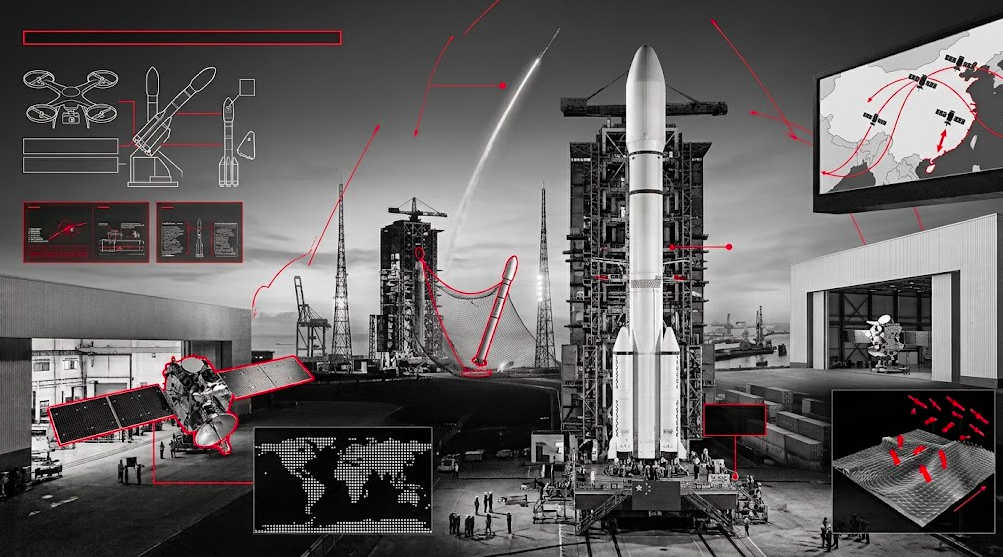
Municipal authorities in the inland industrial Chinese city of Lanzhou are stepping up efforts to deploy state-directed resources into commercial space and low-altitude aviation infrastructure. Zhang Xiaoqiang, the regional Communist Party Secretary, convened a high-level municipal committee meeting last week to dictate localized industrial mandates for these high-tech sectors.
Lanzhou, a traditional manufacturing hub in western China, is attempting to transform its regional economy by engineering a state-managed commercial aerospace industrial base. Local planners intend to mobilize state-run research institutes and academic bodies to force a centralized consolidation of supply chains.
The municipal blueprint mandates state control over foundational raw materials, core component manufacturing, and localized telemetry services. This top-down industrial planning directly reflects Beijing's national directives to rapidly build out parallel supply chains capable of bypassing Western trade restrictions.
In addition to deep-space planning, the municipal directive explicitly focuses on the low-altitude economy, a Chinese industrial term referring to the commercialization of low-altitude airspace via cargo drones, air taxis, and public surveillance aircraft. Lanzhou's local government intends to heavily subsidize and mandate municipal networks for drone testing, regional logistics, and state tourism operations.
To support these capital-intensive systems, the regional leadership pledged to construct government-managed digital aviation networks and centralized communication infrastructure. They also ordered strict, full-lifecycle regulatory oversight to minimize operational risks and enforce absolute security alignment with the ruling party's internal defense guidelines.
This aggressive, government-led market intervention stands in sharp contrast to the highly decentralized aerospace and advanced drone ecosystems operating in the United States. In the American market, breakthrough achievements in reusable rocketry and autonomous aviation are naturally driven by competitive corporate innovation, private venture capital, and consumer demand.
While Western enterprise models rely on market forces to weed out inefficient operations, China's inland municipalities continue to rely on top-down administrative orders to artificially jumpstart regional tech economies. Analysts remain skeptical that these localized, bureaucratically mandated tech parks can effectively replicate the genuine innovation native to open, free-market tech sectors.