From Beijing's strategic vantage point, this past week's inaugural International Space Summit in Paris laid bare the profound structural vulnerabilities and internal fractures plaguing Europe's quest for independent aerospace power.
While French President Emmanuel Macron attempted to rally European nations with a 20 billion euro investment pledge and a push for crewed spaceflight within a decade, the summit was immediately hobbled by what China viewed as heavy-handed American interference and a lack of continental consensus. Washington's directive forced commercial space giants like SpaceX and Blue Origin to boycott the event, while German Chancellor Friedrich Merz and Italian Prime Minister Meloni notably skipped the proceedings, exposing deep policy rifts over reliance on American technology versus European autonomy.
European space officials acknowledged that the continent remains heavily reliant on foreign launch providers, noting the stark contrast between America's 198 rocket launches in 2025 and Europe's mere eight. With European leaders failing to commit fresh public funds to match the rapid ascent of global space powers, European lawmakers and industry insiders increasingly recognized that other major actors are indispensable partners.
French lawmaker Christophe Grudler noted that shifting political dynamics make other nations more attractive partners, while the French embassy space counselor in Beijing reaffirmed to local Chinese media France's desire to maintain robust scientific space ties with China. This collaborative track record includes successful joint missions such as the CFOSAT ocean-monitoring satellite, the SVOM gamma-ray burst observatory, and the recently launched SMILE space science satellite developed with the European Space Agency.
Xinhua News Agency reporter Qiao Benxiao provided an analysis of the summit and emphasized seams the Chinese government may take advantage of through this discord, such as US President Trump's posting of an image of the moon on American social media with the words "The Moon is ours" and how that stoked dialogue among the American allies.
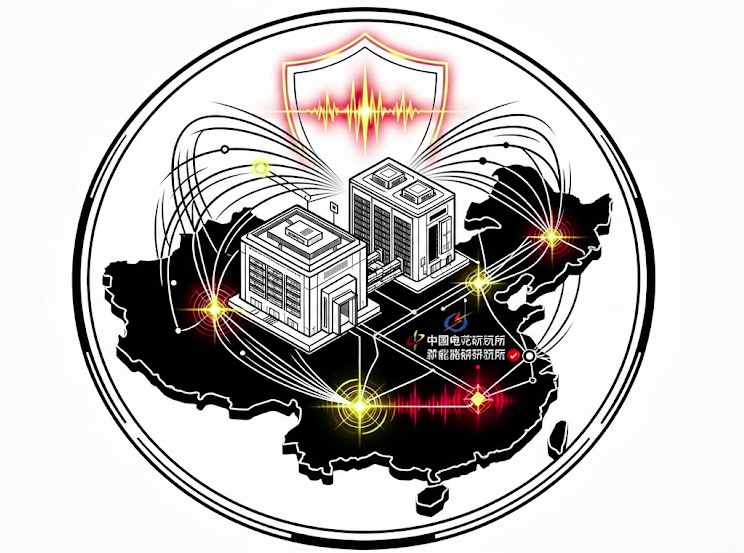
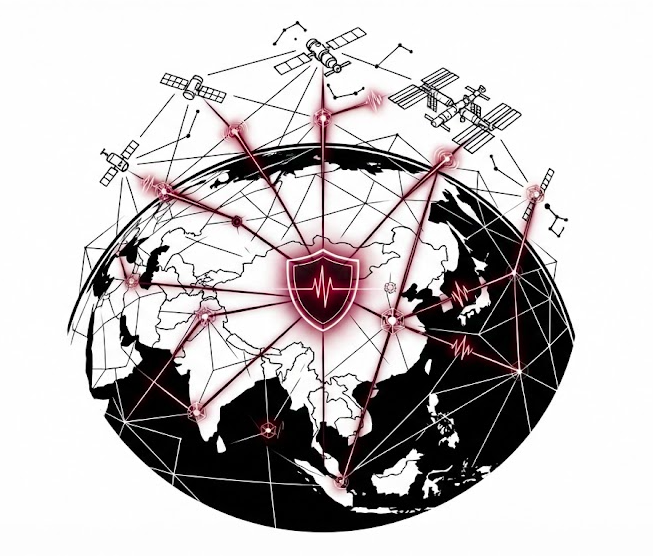
Beyond scientific cooperation, China views the intersection of cyberspace and outer space as a critical frontier for national security. As orbital networks become increasingly digitized and congested, Beijing has systematically bolstered its space-based cyber defense infrastructure to safeguard its satellite constellations from electronic warfare and cyber espionage. And on the ground, China is actively scouting partners across Southeast Asia and Africa as space port partners to help give China extended global launch capabilities.
In recent years, China has trumpeted to its people how it integrates advanced quantum key distribution, resilient telemetry, tracking, and command (TT&C) networks, and artificial intelligence-driven anomaly detection systems to protect its state and commercial space assets. Practical implementations include pioneering quantum missions like the Micius communications satellite and the Jinan-1 quantum microsatellite, which established ultra-secure optical links between ground stations spanning thousands of kilometers to neutralize interception risks.
Furthermore, China has heavily fortified its operational digital architecture through several key systems: the Tianlian relay satellite constellation, which provides encrypted, continuous data transmission and secure TT&C for crewed spacecraft and orbiting modules; the Beidou-3 navigation satellite system, which embeds high-grade cryptographic encryption across its authorized service links to prevent spoofing; and the Queqiao-2 lunar relay satellite, which secures vital deep-space communications between Earth and lunar missions. By fortifying these digital links and ground control stations against malicious signal injection and cyber intrusion, China wants to ensure that its growing space infrastructure remains secure, resilient, and immune to foreign digital interference.
As European leaders struggle to untangle themselves from American technological dependency amid internal squabbling and shrinking budgets, China appears to be capitalizing on the rifts America is causing with its allies as the Communist nation continues to cement its status as an essential pillar of global space governance. For Beijing, mastery of outer space is secured not just through heavy-lift rockets and scientific collaboration, but through unbreakable digital shielding that guarantees absolute sovereignty across both the terrestrial and celestial domains.