Hyundai Motor Group's $15.5 billion investment pledge is about more than India's booming car market. It comes as multinational companies rethink their dependence on China and look for additional manufacturing bases amid geopolitical tensions and supply-chain risks.
India is emerging as a beneficiary of this shift, helped by its large domestic market and growing industrial capabilities. Recent Boston Consulting Group data show that India attracted $351 billion in greenfield foreign investment during 2021-25, more than twice China's $159 billion. The opportunity is substantial, but turning it into a durable manufacturing advantage will require India to address some persistent weaknesses.
Also Read: Hyundai Motor to plug $15.5 billion in India's automotive sector
From China Plus One to a wider supply-chain rethink
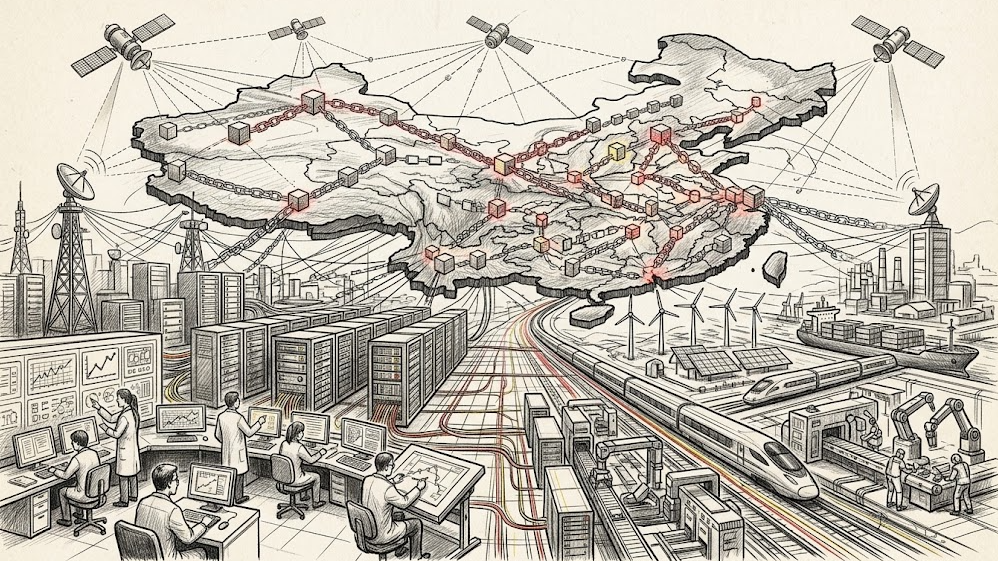
For decades, China offered manufacturers an unmatched combination of scale, infrastructure, supplier networks and low production costs. Companies could source components locally, manufacture at scale and export finished products through established logistics networks.
The pandemic exposed the risks of concentrated supply chains, while US-China tensions, trade restrictions and China's growing technological rivalry with Western economies have added uncertainty. Multinationals are increasingly looking at dual or multiple sourcing rather than depending on one country.
This does not mean companies are abandoning China. Its manufacturing ecosystem remains difficult to replicate. The emerging strategy is to retain Chinese operations while developing additional capacity elsewhere.
India is competing for this additional investment alongside Malaysia, Indonesia, Thailand and Vietnam. BCG data reported by ET show that India's greenfield investment rose 61% between the 2016-20 and 2021-25 periods. China's comparable figure fell 54%. Malaysia recorded a 125% increase, while Indonesia saw a 34% rise, showing that the shift is benefiting several Asian economies rather than India alone.These figures represent investment in new projects and should not be confused with capital already spent or official annual FDI inflows. Still, they indicate where multinational companies are directing their expansion plans.
Hyundai's commitment reflects India's changing role
Hyundai's investment plan is notable for its scale and scope. The South Korean group plans to invest $15.5 billion in India between 2026 and 2032, including around $700 million for research and development. The plan covers additional manufacturing capacity at Hyundai Motor India and Kia India, a vehicle testing track and a dedicated investment entity.
The group already has an annual production capacity exceeding 1.4 million vehicles in India, across its Chennai and Pune facilities and Kia's Anantapur plant. It employs more than 24,000 people in the country. The new investment builds on an existing industrial base rather than starting from scratch.
Also Read: Stellantis, Tata Motors ink passenger vehicle manufacturing pact for global markets
India is not simply attracting factories to serve local customers. Hyundai's plans for R&D and testing suggest a wider role for India in engineering and developing vehicles. If local suppliers also become more capable, the country can capture more value from each vehicle produced.
Hyundai's strategy reflects a divergence in its regional priorities. The automaker's manufacturing footprint in China hasn't grown following years of competitive pressure, and now it is making aggressive plans to ramp up its India operations. However, its renewed push to revive sales in China means this is not a straightforward withdrawal from China in favour of India.
The automotive sector offers other examples. Suzuki announced plans in 2025 to invest around $8 billion in India. Toyota and Suzuki have outlined major expansion plans, while Honda intends to use India as a production and export base for a planned electric vehicle. Reuters reported last year that the Japanese manufacturers were expanding in India as they sought to reduce dependence on China and strengthen their export capabilities. While Honda's China footprint has been shrinking, Toyota is restructuring its China operations as local automakers pose stiff challenges.
Hyundai's decision therefore fits a larger change in the strategies of Asian manufacturers.
The investment story extends beyond cars
Under this trend, electronics is another important example. Apple has expanded iPhone production in India through manufacturing partners such as Foxconn, helping the country become a significant production and export base. Bloomberg reported in July 2025 that more than 300 Chinese engineers and technicians had left Foxconn's Indian iPhone factories following a withdrawal of staff. The episode also highlighted India's continuing dependence on foreign technical expertise and Chinese machinery and components.
Semiconductors, electronic components and solar manufacturing are other areas where government incentives are intended to attract investment. India has also relaxed some investment rules for companies from countries sharing a land border with India, particularly China, to facilitate investment in selected manufacturing sectors.
South Korean companies are also expanding their industrial presence beyond automobiles. Samsung and LG have established manufacturing and research operations in India, while POSCO and JSW announced plans for an integrated steel plant involving around $7.3 billion in investment at the 2026 Korea-India Summit.
These developments suggest that India's opportunity is not confined to a single industry. However, announced commitments across sectors differ in maturity and should not all be treated as completed investments.
Why India is attracting more attention
India's first advantage is market size. India's growing demand gives manufacturers a large customer base to serve before they even consider exports. For automakers, consumer electronics companies and industrial suppliers, local demand can help justify the initial cost of setting up production. The second is the availability of labour. India has a large workforce and competitive wages in many occupations. Government incentives have also improved the economics of setting up factories in selected industries.
Another factor is India's growing integration into global supply chains. Once a company establishes production, it can encourage component makers, logistics providers and specialist suppliers to follow. That creates an ecosystem that can attract further investment.
Geopolitics adds another reason to diversify. For companies exposed to trade restrictions or disruptions in China, an additional manufacturing base can reduce risk. India benefits from this reassessment, although Southeast Asian economies are competing for the same business.
What India must get right
The biggest challenge is converting investment announcements into productive factories that operate at competitive costs. Infrastructure has improved, but manufacturers still face logistics bottlenecks, uneven industrial infrastructure and delays in some approvals.
Skills are equally important. As BCG's Nikolaus Lang told ET, India needs workers trained in activities such as stamping, painting, assembly and mechatronics to deepen manufacturing and localise supply chains. A large labour pool does not automatically translate into a workforce ready for advanced industrial production.
Local supplier development is another priority. India's electronics industry, for instance, can expand assembly quickly, but capturing more value requires domestic production of components, specialised machinery and materials. Restrictions on technology transfers and continued dependence on imported inputs can slow that process.
Another important factor is that manufacturers investing billions of dollars over several years need predictable regulations, competitive power costs and reliable access to export markets. India must also remain competitive against Southeast Asian countries that have developed efficient export-oriented manufacturing systems.
Can investment create an ecosystem?
Hyundai's pledge is a useful indicator of India's growing importance in global manufacturing, but the amount announced is only the beginning. Its real significance will depend on how much capacity is actually built, how many suppliers develop locally and whether India becomes a source of exports and technology rather than mainly a destination for domestic sales.
The greenfield investment numbers suggest that new projects are increasingly being directed towards India. The next challenge is to make those projects productive and internationally competitive. If India can combine its domestic market with skilled workers, efficient logistics and deeper local supply chains, the current diversification wave could become a lasting shift in its industrial position. If it cannot, much of the investment may remain concentrated in selected sectors, while competing Asian economies capture a larger share of the opportunity.