
You're reading an excerpt from Al-Monitor China-Middle East, where we analyze China's deepening engagement with the region. To get this newsletter in your inbox weekly, sign up here.
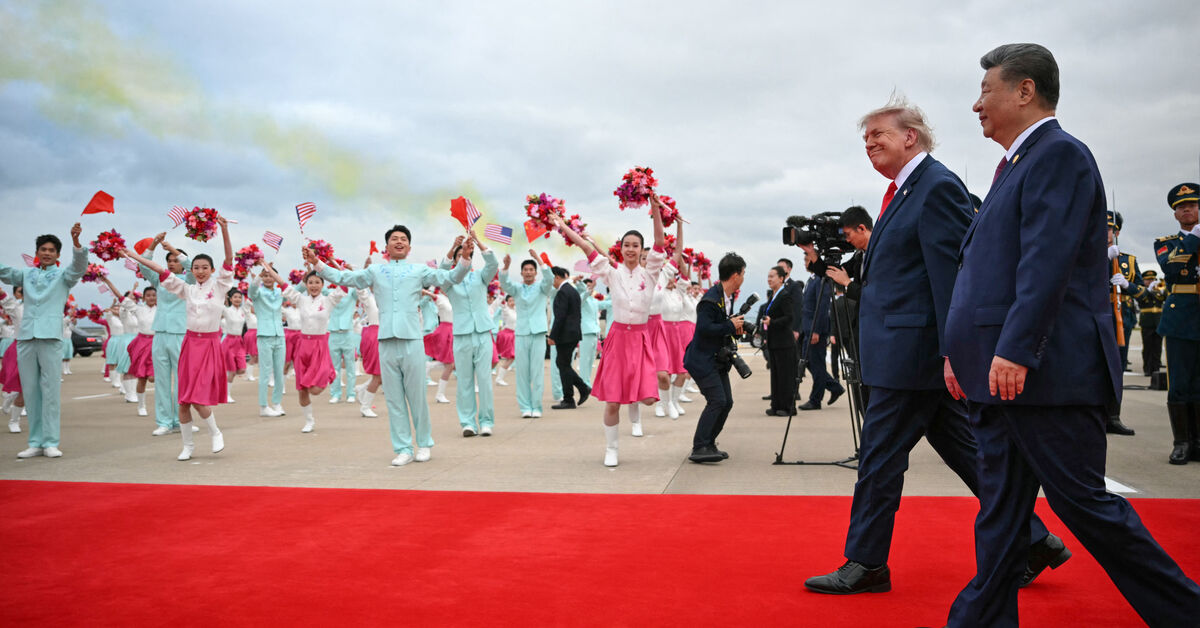
WASHINGTON — Another trip to China, another round of expectations that Chinese President Xi Jinping can help President Donald Trump find an exit from the Iran war. Their third substantial meeting since the start of the war began with hopes for a breakthrough, but once again, none emerged.
Beijing has reasons to help de-escalate the conflict, but its ability to deliver Tehran is limited, and its cooperation with Washington is unlikely to come without conditions.
Let’s unpack,
Joyce (sign up on LinkedIn or online here)
Leading this week
Ahead of the talks in Shenzhen, Trump told Fox News that Washington did not need Chinese or Russian assistance to end the Iran war.
“We don’t need any help,” Trump said in Shenzhen. “We’ve defeated their navy, we’ve defeated their air force, we’ve defeated their anti-aircraft.”
China could help through economic incentives, diplomatic pressure or guarantees supporting an agreement, but Beijing, for now, is in no rush. Four incentives are driving it to stay largely on the sidelines.
1. High price for the US
The 10-month-old conflict with Iran continues to tie down US forces that could otherwise be deployed elsewhere, in particular to contain Chinese expansion in Asia. The arrival of the USS Theodore Roosevelt in the Middle East on Sunday, as Jared Szuba reports, briefly brought the number of US aircraft carriers in the region to three before the USS George Washington departed soon thereafter.
The Congressional Budget Office estimated that operations for the Iran war had cost the Pentagon approximately $38 billion through Aug. 1, including replacement munitions, equipment losses and additional operating expenses.
The United States' energy cushion is also under strain. As of Nov. 13, the Strategic Petroleum Reserve had fallen to 276.4 million barrels, down from 415.4 million barrels before the war.
2. Chinese limitations
China’s economic relationship with Iran gives it leverage, but not control, over Tehran’s decision-making. Iran’s new leaders are more hardline than their predecessors and are pursuing changes to the country's nuclear doctrine, with the Islamic Revolutionary Guard Corps in the driver’s seat on regional military strategy.
Beijing also cannot deliver relief from US sanctions or guarantee a smaller US military footprint in the Gulf, both key demands by Iran.
3. Regional deals easier
China may have greater success supporting regional security arrangements than brokering a comprehensive US-Iranian settlement. Its role in the 2023 Saudi-Iranian rapprochement offers a model.
Beijing's side deals with the Houthis and its recent diplomatic engagement with Iran, Oman and Saudi Arabia could pave the way for narrower understandings protecting Gulf territory, energy infrastructure and shipping. Any such arrangements would serve Chinese interests without requiring Beijing to assume responsibility for enforcing peace.
4. Cooperation with concessions
Beijing could view assistance on Iran as leverage in negotiations with the United States over tariffs, technology and Taiwan.
These issues, however, are part of a broader strategic relationship. Given the Republican Party's midterm election losses, Trump is even less likely to make major concessions and will face greater congressional oversight.
What comes next
With no deal in sight, the current state of “no war, no peace,” as Iran’s parliament speaker and chief negotiator Mohammad Bagher Ghalibaf put it, is likely to persist. An escalation in the form of renewed US-Israeli strikes remains possible, but it would only further entrench the current stalemate.


