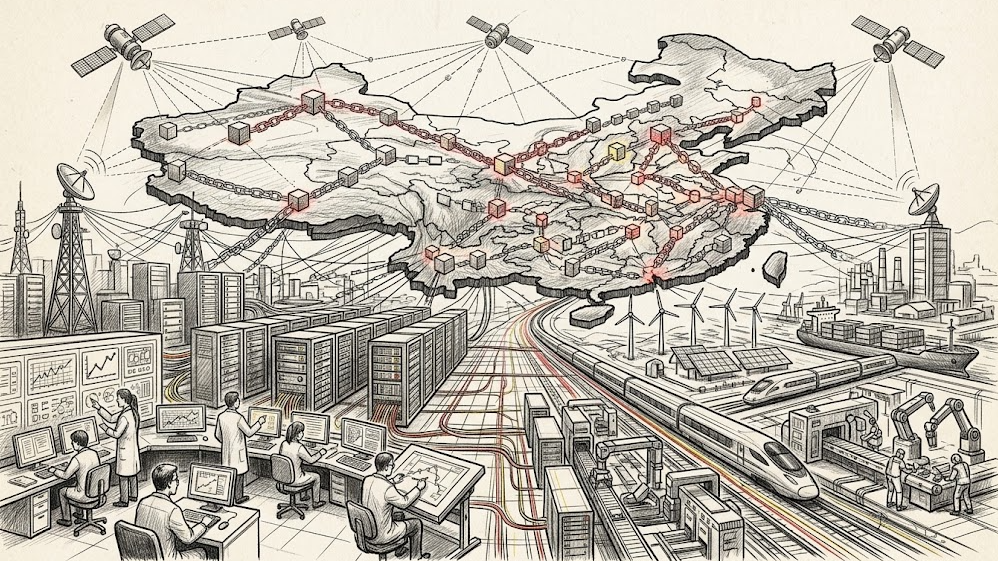
Since generative AI took off around 2022, the boom has opened a new front in the United States and China’s race for technological supremacy.
More than 3,000 data centers have sprung up across all 50 states, with more than 1,400 others in various stages of development, according to Data Center Map, a Denmark-based commercial database. The thousands of specialized computer chips needed to process and store AI workloads consume enormous amounts of energy and require constant cooling to prevent overheating.
Residents and lawmakers on both sides of the aisle have raised concerns about energy-intensive centers’ impact on local power grids, water supplies and electricity costs, with 71 percent of respondents to a March Gallup poll opposed to data-center construction in their communities.
“Local communities see more downsides than benefits. Benefits include greater revenues and some jobs—but much of this is temporary construction jobs; operation requires not much staff,” Kyle Chan, a fellow at the Brookings Institution’s John L. Thornton China Center, told Newsweek.
China’s Plans for Data Centers
China currently has less than a tenth as many data centers, but it is trying to make up for that through an enormous state-led buildout. Demand for AI computing in China will increase 500-fold by 2030, Pu Ding, general manager of Beijing Highlander Digital Technology’s underwater data center project, told the China Daily.
Over the next five years, China plans to invest approximately $295 billion in building out a nationwide network of computing hubs, led by state-owned enterprises such as China Mobile.
It’s unclear, however, how much local resistance the centers face in China, as the government’s censorship and tight management of dissent make public attitudes difficult to assess.
China’s Answer: Build West
Beijing has made AI a core state priority, with the Chinese Communist Party making AI-related technology central to its development plans. And unlike the U.S.’s largely market-driven buildout, Beijing is taking a much more active role in deciding where those facilities are built.
Data centers are the physical backbone of that push.
Chinese planners call the main framework “East Data, West Computing.” The idea is to push much of the physical buildout of data-center and computing infrastructure into China’s vast, arid and less populated western regions rather than allowing it to remain concentrated near crowded eastern cities.
The strategy may address a geographical imbalance: China’s east coast is home to many of the country’s most advanced data centers, which generally have higher utilization rates, meaning a larger share of their computing capacity is actually being used.
But data centers are harder to build and power in those coastal cities because of limited land, higher construction costs and power-grid constraints, Chan said.
In the western and central reaches of the country, land is more plentiful and large wind and solar projects can help power data centers. AI startup DeepSeek recently advertised for a senior operations engineer for a data center planned in Ulanqab, Inner Mongolia, on the steppe in the Inner Mongolia Autonomous Region.
Power and Water
Large clusters of data centers can strain local power grids, requiring expensive upgrades that have, in some cases, already contributed to higher electricity bills for nearby residents.
Cooling is another problem. Keeping thousands of high-performance chips running around the clock often requires extensive cooling systems, many of which rely on large amounts of water.

That is especially a concern for China, which already faces chronic water shortages, especially in its northern and central regions, the country’s agricultural heartland.
Over 80 percent of China’s groundwater is unfit for drinking, half of its aquifers are too polluted for industrial or agricultural use, and 75 percent of its lakes and reservoirs are too polluted for human consumption, according to estimates from the Lowy Institute.
Underwater Data Centers?
China is also the first to try one future-facing approach: instead of bringing large amounts of water to data centers, bringing the data centers underwater.
The first commercial underwater data center, developed by Beijing Highlander Digital Technology, began operating off the island province of Hainan in 2023. The servers are sealed inside pressure-resistant containers below the surface, with seawater used to absorb heat and reduce cooling demand compared with land-based facilities.
In May, China launched another underwater data center online off the coast of Shanghai—this time powered by offshore wind energy—pairing high-powered computing with green energy.
The project uses 22.8 percent less power than conventional land-based facilities by using offshore wind power. Meanwhile, its use of seawater cooling accounts for just 10 percent of overall energy consumption compared to the usual 40 to 50 percent, developers say.
Challenges Remain
China’s data-center boom still faces major obstacles, analysts say.
“China’s data center boom is not without its own challenges. First among those is access to the most cutting-edge GPUs from companies such as Nvidia, which are export-controlled by the U.S., and limitations on China’s own chip production capacity,” Chan, of the Brookings Institution, wrote in a recent X post.
Meanwhile, there is a glut of older, less powerful data centers, while newer facilities designed specifically for AI remain in short supply, Chan said.
Another issue is that many companies also rushed into the booming sector without extensive experience, resulting in facilities that fail to make efficient use of their computing power, with some data centers operating at less than one-third of their potential capacity.
Contact Newsweek editors on this story: Frances Mao and Sam Wilson.

Leave a Reply