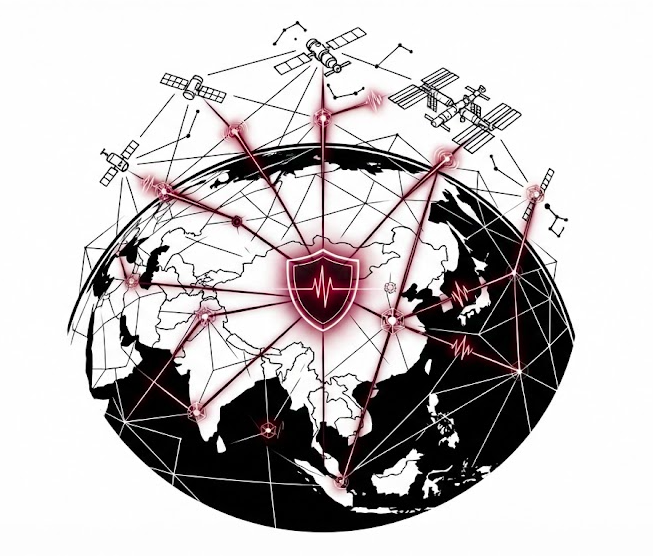
Space is becoming a new battleground for modern warfare, with the US recently deploying "space control weapons" in Earth's orbit. This move has raised concerns about the militarization of space, especially as countries like Russia and China are also developing similar systems. India's role in this evolving space conflict is crucial, given its strategic position and growing space capabilities.
Several countries, including the US, Russia, China, and India, have satellites in orbit supporting crucial military functions like navigation and intelligence gathering. However, the focus has shifted to developing satellite networks and spacecraft capable of attacking or disrupting other satellites. China's successful test of the Shijian-21 satellite, which altered a defunct satellite's orbit, and reports of Russia developing a "space-based nuclear weapon" highlight the escalating space race.
While the US has openly acknowledged deploying space systems with potential anti-satellite capabilities, India has not publicly pursued space-based weapons development. The key question is whether India has the necessary defenses against potential attacks on its satellites by adversarial space weapons, especially in light of global advancements in ASAT technology.
Anti-satellite weapons (ASATs) are designed to target and destroy enemy satellites. The most common ASAT weapon is a missile, with the US conducting the first successful ASAT test in 1985. Intercepting a satellite in orbit requires precise tracking, calculation, and high-speed guidance systems. China and Russia have also demonstrated ASAT capabilities by destroying satellites in previous tests.
India showcased its ASAT capability in 2019 with Mission Shakti, becoming the fourth country to successfully destroy a satellite in orbit. The mission involved launching a three-stage interceptor missile that destroyed the Microsat-R satellite through a direct collision in Low-Earth Orbit. While India has not conducted additional tests due to space debris concerns, Mission Shakti validated the country's ability to detect, track, and intercept fast-moving objects in space.
In the context of the evolving space warfare landscape, India's ASAT capability positions it as a significant player in the global space race. As nations continue to develop advanced space technologies with military applications, India's ability to defend its assets in space will be a critical factor in ensuring national security and strategic interests in the increasingly contested domain of outer space.