
The West Needs a Pax Biologica
Chinese firms are displacing Western competitors in one of the century’s most important and most overlooked industries.

Workers at an unnamed biotech company in San Francisco, California, on March 1, 1994. Eric Sander / Liaison Agency
Every U.S. politician wants to reinvigorate manufacturing, but most are chasing a 20th-century version of it. Visions of blue-collar Americans assembling cars or forging steel might have electoral appeal, but they do not reflect the industries that will meaningfully bolster the U.S. economy and its competitiveness.
High-tech manufacturing of semiconductors and other parts of the artificial intelligence supply chain have received plenty of attention, but these products make up only a narrow slice of the physical economy. To truly revitalize the United States’ manufacturing ability, it needs a new paradigm that can touch all corners of the economy.
Every U.S. politician wants to reinvigorate manufacturing, but most are chasing a 20th-century version of it. Visions of blue-collar Americans assembling cars or forging steel might have electoral appeal, but they do not reflect the industries that will meaningfully bolster the U.S. economy and its competitiveness.
High-tech manufacturing of semiconductors and other parts of the artificial intelligence supply chain have received plenty of attention, but these products make up only a narrow slice of the physical economy. To truly revitalize the United States’ manufacturing ability, it needs a new paradigm that can touch all corners of the economy.
That paradigm is biomanufacturing.
Simply put, biomanufacturing entails using a biological system, usually a living microbe or a specialized protein, to make goods. For millennia, humans have used biomanufacturing, from the fermentation used to produce beer or cheese to the scaling of penicillin production during World War II, and, more recently, the development of recombinant human insulin in the 1970s. Today, biomanufacturing can produce everything from mRNA vaccines to materials used to make plastics.
Soon, a wide range of advanced materials, bulk chemicals, and even cement could be grown in specialized vats and bags using methods that are more precise, resource-efficient, and environmentally friendly than traditional manufacturing. The way we produce agricultural goods, materials, consumer products, and more—as much as 60 percent of the world’s physical inputs—could be transformed by biomanufacturing in the coming decades, a market shift worth trillions of dollars.
The United States, as the pioneer of this industry, still holds a slight lead, particularly across the laboratory tools, vats, specialized consumables, and other technologies that underlie biomanufacturing and enable industrial-scale production. Yet because of its disjointed policy ecosystem, it is not ready to take advantage of this seismic shift.
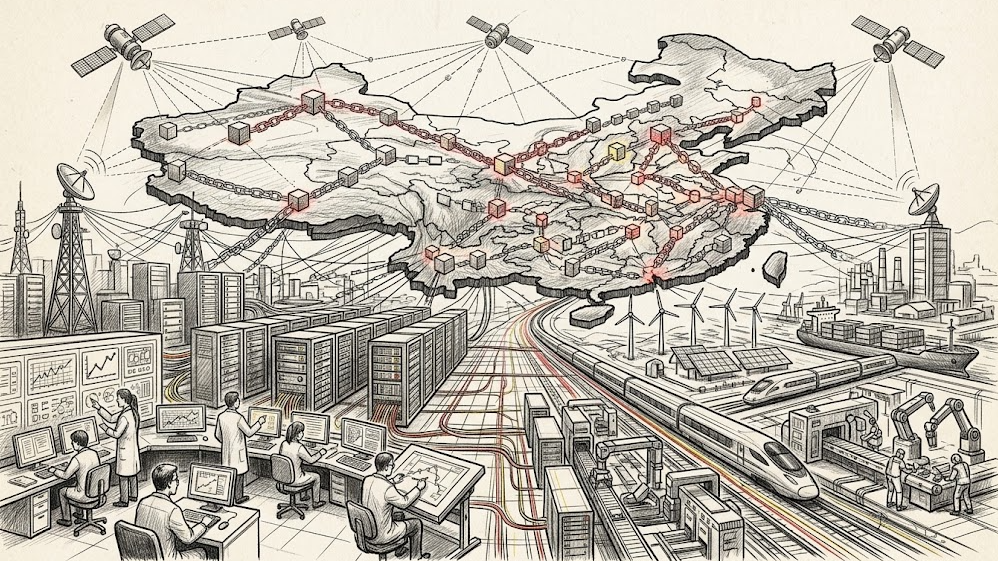
China, however, is. Through a patient mixture of investment and industrial policy, Beijing has positioned itself to leapfrog the United States in biomanufacturing. Without a course correction, the United States risks ceding the high ground of this manufacturing frontier—and with it, supply-chain independence, geopolitical leverage, and the next century of industrial leadership.
Across a wide swath of markets that rarely make headlines—from animal feed to pharmaceutical components—Chinese biomanufacturers are steadily gaining ground and displacing Western competitors.
Consider the recent story of glufosinate, a relatively nontoxic herbicide that kills stubborn weeds. Farmers spend more than $2 billion on glufosinate each year. It was historically produced through chemical means by a variety of global suppliers, but between 2022 and 2023, Chinese overcapacity led to a price collapse of about 75 percent. This drop devastated leading non-Chinese suppliers such as the German chemical giant BASF, which was forced to close major manufacturing plants, lay off hundreds of employees, and pivot to assembling its formulations from imports. Biomanufacturing provided a rare path to maintain profitability: U.S. researchers had developed a far more efficient biological method to produce glufosinate in the 2010s. Yet it was Chinese firms that moved decisively to commercially deploy the process and capture this new share of the market. By shifting from chemical to biological production, China is positioned to dominate the future supply of this key herbicide—a pattern that is being repeated for countless other products.
China’s success in this field didn’t happen by accident. Biomanufacturing is the only key technology Beijing has labeled both a “future industry” and a “core technology” in its current five-year plan. Decades of state-directed financial support, strategic guidance, and regulatory streamlining have helped Chinese biotech companies gain ground across most key areas of the industry.
To their credit, the geopolitical stakes of this shift have not been lost on U.S. leaders. The Biden administration launched a National Biotechnology and Biomanufacturing Initiative that coordinated agencies’ efforts and steered more than a billion dollars toward manufacturing and infrastructure projects. Though the Trump administration has rolled back some of these actions, it has maintained a strategic emphasis on biomanufacturing. A congressional commission and bipartisan caucus are also advancing a suite of targeted legislation, including bills to authorize additional funding, craft procurement standards, and establish biotechnology-specific executive institutions.
Together, these actions have raised the political profile of biomanufacturing and provided some initial investments to jump-start industrial policy, but they are not enough. Strategic direction has been fragmented, funding pools are limited, and support has only been deployed narrowly and slowly. Across the board, the United States has been either unwilling or unable to deploy the same level of sustained support as China. Case in point: Since 2020, the Pentagon, by far the biggest public supporter of U.S. biomanufacturing projects, has invested about $1 billion in biomanufacturing—far less than the $4 billion invested by China in 2024 alone.
An additional hurdle is that much of the biomanufacturing activity and infrastructure that U.S. firms rely on come from abroad: German companies are indispensable providers of industrial equipment, Japanese corporations produce key consumables, and firms from South Korea and Switzerland have built out immense production capacity.
Rather than sit back into a deepening reliance on imported Chinese biomanufactured goods or retreat inward to cobble together a winning industrial strategy, U.S. leaders should double down on this interdependence and work with partners to build a resilient Western biomanufacturing powerhouse that can compete with China in the long haul.
The White House is already heading in a similar direction with artificial intelligence and its early-stage “Pax Silica” initiative, which has brought together more than 20 signatories hoping to align AI supply chains. Early actions include launching a $250 million foreign assistance fund, developing a model for supply-chain credentialing, planning economic development zones, announcing workforce development projects, and streamlining export processes.
A similar effort for biomanufacturing—a “Pax Biologica”—could follow this template while adjusting for its shortcomings. Like Pax Silica, it should launch with key strategic partners, principally Germany, Switzerland, Japan, South Korea, the United Kingdom, and the European Union. Initial efforts should center on streamlining trade processes, identifying mutual supply chain vulnerabilities, and developing opportunities for shared workforce development. Ideally, these would be paired with a modest seed fund to catalyze co-investment in biomanufacturing infrastructure and process development.
The most critical early step, though, is harmonizing standards and regulations, something Pax Silica has yet to accomplish. Governments vary widely in how they regulate biomanufacturing, especially for non-healthcare applications. As a result, companies that develop a promising biomanufacturing process or product face a deeply fragmented international market when they try to scale it. Delays can run several years, and—if the process is successful at all—the resulting financial burdens hinder all but the most well-resourced firms. Companies can’t be expected to innovate with confidence and scale with speed under those conditions.
Whoever defines the international rules for biomanufacturing can also strategically influence which technologies succeed and which companies are well-positioned to compete. China understands this: A recent state-affiliated analysis explicitly framed biomanufacturing standards as a way to “secure China’s competitiveness in the global economy.” A Pax Biologica would provide a united front to ensure that the interests of Western firms are well-represented as these rules are developed.
Such an effort does not need to be built from scratch. Recent legislative efforts have pushed to clarify domestic biotechnology regulation, a long-standing source of frustration for the industry, and the U.S. National Institute of Standards and Technology has led the development of biotechnology guidelines in several sectors, including work in international standards bodies.
Given the global economic importance of biotechnology, the strategic value of biomanufacturing in particular, and the looming threat of Chinese industrial domination, now is the time for an effort like Pax Biologica to take more forceful action at the international level. Concrete starting points could include establishing a regime for mutual recognition of regulatory reviews, coordinating export and trade processes for biomanufactured products, or creating mechanisms to codevelop infrastructure.
This work will not be diplomatically cheap, but it is one of few ways to give Western biomanufacturing a major boost without a “CHIPS Act for biotech”-scale funding appropriation. Though it won’t guarantee U.S. competitiveness on its own, it would build momentum for the United States and its allies to work at a scale that can keep pace with China.
The rise of biomanufacturing marks a generational shift, and the United States cannot capture its benefits alone. Unless Washington works with international partners to assemble a larger and more coordinated biomanufacturing ecosystem, it will cede yet another strategic capability to the Chinese industrial juggernaut.
Lucas L. Fluegel is a visiting scholar in the Technology and International Affairs Program at the Carnegie Endowment for International Peace, where he explores the implications of advanced biotechnologies for international governance and global stability.
Read More
-

High-angle aerial view of a massive industrial complex surrounded by wide dirt fields and flat countryside. The facility consists of numerous long, flat-roofed rectangular buildings arranged in orderly clusters, with paved roads, parking lots, and long rows of solar panels or covered structures running alongside them. Active construction areas with exposed reddish-brown soil stretch out adjacent to the developed campus under a clear sky. The Real Footprint of Trump’s Data Center Boom
What the sprawling buildout means for energy, water, and land.

-

A visitor walks by a billboard for AI at the PT Expo in Beijing on Sept. 22. How America and China Compare on AI
And why the two countries have different definitions of winning.
-

An outside view of an Apple data center in Guiyang, in China's southwestern Guizhou province, on July 24. Are Chinese Firms Handing the United States Data?
AI competition may be an unwitting weakness for Beijing.


Stories Readers Liked
-

A Taiwanese crowd protests while waving flags of the Republic of China. -

U.S. Defense Secretary Pete Hegseth and Joint Chiefs of Staff Chairman Dan Caine depart following a national ceremony for POW/MIA Recognition Day in Arlington, Virginia, on Sept. 18. -

Xi (left) and Trump (right) are shown up close, with Xi looking at Trump. -

Putin and Xi are both seen in profile as Putin walks to the right and away from Xi, just a few feet of space between them. Xi, meanwhile, is also faced away from Putin, standing and looking down at his feet or the red carpet beneath them. Both men wear dark suits. -

A man wearing a dark suit jacket, light blue button-down shirt, and patterned red tie sits on a dark gray couch against a textured dark blue wall. He is looking off to the side with a mild smile, next to a teal pillow. -

An illustration in red and blue tones depicting five silhouetted figures running forward through a dark corridor flanked by large, textured Russian lettering on the walls and floor. Light radiates from the far end of the tunnel behind them -

U.S. President Donald Trump and Chinese President Xi Jinping after a welcome ceremony in Beijing. -

A statue of a seated, bearded man with a bare torso and draped cloth around his waist, holding a scroll in one hand, positioned in front of a row of large classical columns. -

Negotiators from the United States, Canada, and five European countries converse after finishing the draft of the North Atlantic Treaty in Washington on March 18, 1949. -

An aerial photo shows Doha in the booming petrostate of Qatar.


Energy War Ramps Up

The Plan to End the Ukraine War
Trump’s diesel-deal feud with Zelensky obscures a more important effort.
-

An Estonian border police officer walks beside a barbed-wire-topped fence along the Estonia-Russia border. -

Digital signage outside a gas station shows the cost of fuel in London on Sept. 24. -

Trump is seen from behind, wearing a dark navy suit, walking toward a dark blue stage curtain with a illuminated U.S. flag positioned to the right. Trump's right hand is raised in a thumbs-up gesture.


Join the Conversation
Commenting is a benefit of a Foreign Policy subscription.
Subscribe
Subscribe
Already a subscriber?
.
View Comments
Join the Conversation
Join the conversation on this and other recent Foreign Policy articles when you subscribe now.
Subscribe
Subscribe
Not your account?
View Comments
Join the Conversation
Please follow our comment guidelines, stay on topic, and be civil, courteous, and respectful of others’ beliefs.
View Comments
Change your username |
Log out
Change your username:
CANCEL
Confirm your username to get started.
The default username below has been generated using the first name and last initial on your FP subscriber account. Usernames may be updated at any time and must not contain inappropriate or offensive language.