The Next Global Energy Crisis Won’t Come From Just One Direction | OilPrice.com
- Europe’s latest energy crisis started with the Strait of Hormuz closure and got worse when record summer heat pushed grids to the edge and forced nuclear output cuts in France and Hungary.
- Asia took the hardest hit from Hormuz, and Southeast Asia’s rush into solar is outpacing grid capacity while leaning heavily on Chinese components.
- A new World Economic Forum analysis argues cyberattacks, sabotage, extreme weather and geopolitical risk need to be managed as one system, not by separate teams with separate budgets.
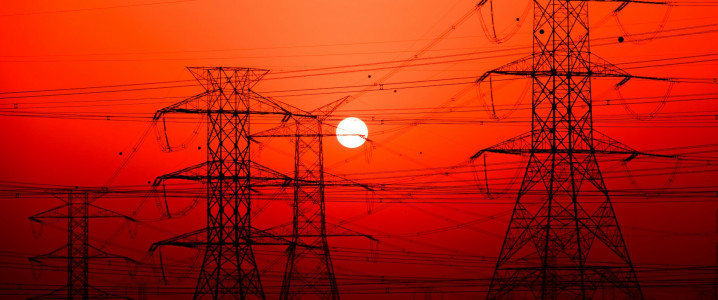
The next global energy crisis is just around the corner. If the past four years have taught us anything, it’s that an energy crisis can be brought about unexpectedly and by a number of factors – often in tandem. Changing weather patterns, increased grid stress, geopolitical tensions, and conflict have converged in different ways in different moments to send global energy markets into extreme volatility and have caused sweeping blackouts even in some of the world’s most developed nations, such as the grid collapse across Spain and Portugal in 2025.
Back in March of this year, the BBC reported with dismay that Europe had “sleepwalked into yet another energy crisis." At the time, the report was in reaction to the closure of the Strait of Hormuz, which left global oil and gas markets in crisis and laid bare, once again, how dependent the continent continues to be on oil imports. "We swore we’d learn. We promised things would change but here we are," a ‘highly frustrated European diplomat’ was anonymously quoted in the BBC report.
"Instead of concentrating on much-needed long-term plans – about how to make Europe more competitive in this increasingly volatile world, [European] prime ministers and presidents are now in a panic over [energy] prices, worried about angry voters and scrambling for short-term solutions," the source went on to say. "Just like the crisis after Russia’s full-scale invasion of Ukraine. Different conflict. Same European divisions; same dilemmas over energy. We can’t keep going round in these circles. Something’s got to give."
The real kicker is that this report came out far before the real clincher of Europe’s energy crisis had even occurred – the hottest European summer in the history of recorded temperatures. The blistering heat wave that swept the continent pushed energy grids to the absolute brink of collapse and forced France and Hungary to take nuclear reactors offline due to lack of cooling ability just when energy was needed most to prevent heat-related deaths.
What is more, new reporting indicates that Europe’s next energy crisis will be from a completely new threat: peak oil. An August report from The National Interest warns that Europe’s next energy catastrophe will come from a decline in oil and gas exports from key producers.
And Europe is not alone in its increased grid stress and energy market volatility. Asian markets have suffered the most from the closure of the Strait of Hormuz, and developing nations are even less able to absorb and bounce back from skyrocketing energy rates. In response, many emerging economies are rushing to build up indigenous clean energy sources, but this approach comes with its own risks: many countries in Southeast Asia are building out solar energy resources far faster than the grid can support, and this development is highly dependent on components that are almost completely controlled by China, presenting critical supply chain vulnerabilities.
These compounding factors speak to the new reality that energy strategists have to contend with in order to plan for grid resilience going forward. “Neither 2025’s blackouts or the sustained grid pressure seen this year had any single cause,” the World Economic Forum reported earlier this week. “Each was the result of a chain reaction, a technical fault, a control failure or a climate shock rippling through systems and sectors that used to be managed separately. This is a shift that we must pay attention to.”
According to the World Economic Forum, this shift requires a systems-thinking approach that allows the world to better recognize threats as they arise, and then swiftly mobilize to mitigate those threats. The organization argues that reaching this goal will require global leaders to redress three key issues: fragmented communication between the energy industry and world governments, opaque supply chains, and a lack of legal authority for utilities to respond meaningfully and quickly to the threats they detect.
“For most of the past decade, energy companies have treated cyber-attacks, physical sabotage, extreme weather and geopolitical disruption as distinct problems, each with its own team, its own budget and its own risk register,” the World Economic Forum argues. “But in increasingly digitalized and interconnected energy systems, that separation is starting to look like the problem itself.”
By Haley Zaremba for Oilprice.com
More Top Reads From Oilprice.com



Haley Zaremba
Haley Zaremba is an energy journalist and researcher with more than a decade of professional experience covering global energy systems, land and natural resources, and…