Several companies listed on China's Science and Technology Innovation Board, also known as the Star Market, have secured top honors at the 2025 National Science and Technology Awards, highlighting their growing role in commercializing cutting-edge research. The awards, widely regarded as some of the highest scientific honors in the country, serve as a key test of technological innovation and market viability for domestic enterprises.
Viewing these accolades from a Western vantage point provides critical insight into the Chinese government's strategic playbook for technology development, showcasing how Beijing aligns capital markets, academic institutions, and commercial enterprises to systematically eliminate foreign dependencies.
Approximately 10 Star Market companies participated in projects that won either the National Technological Invention Award or the National Science and Technology Progress Award. These honors showcase a successful model where academic institutions lead theoretical research while private and public companies drive commercial engineering and scale-up. For Western observers, this illustrates the state's vision of technology firms not merely as independent consumer-facing profit centers, but as critical instruments of state-led industrial policy tasked with filling "chokepoint" vulnerabilities.
In the category of the National Technological Invention Award, which recognizes original innovations that fill international technical gaps, both Oulin Biosciences and Leaderdrive secured second-class honors. Oulin Biosciences partnered with the Army Medical University to develop critical technologies for a superbug vaccine, establishing a new composite design for multi-target blocking. Leaderdrive collaborated with Shanghai Jiao Tong University and other industry partners to develop advanced robotic components, breaking a 40-year foreign monopoly on harmonic gear technologies.
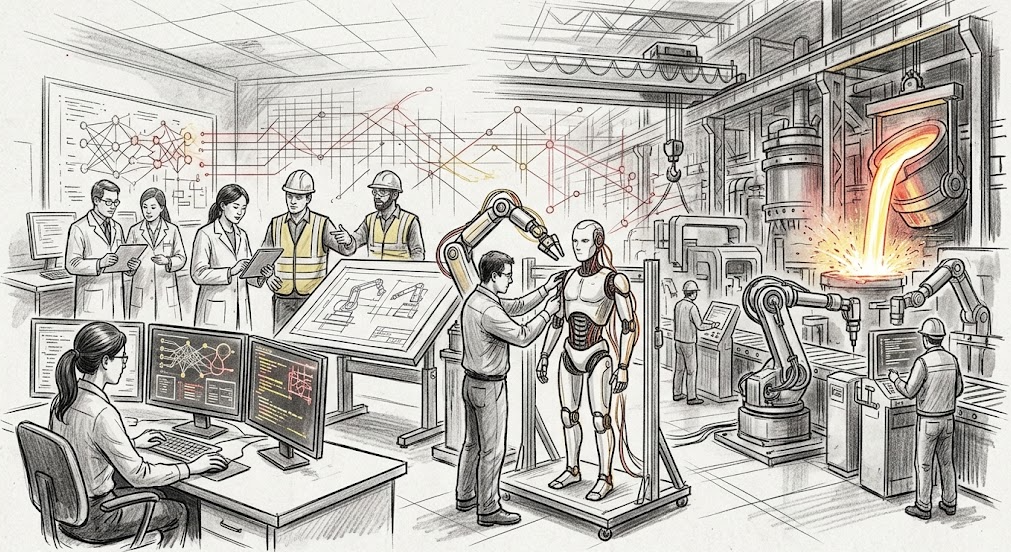
Meanwhile, SUPCON Technology earned the sole first-class National Science and Technology Progress Award among the Star Market contingent. Participating in a green and intelligent manufacturing project led by Tongkun Group, SUPCON provided critical system integration to automate the polyester fiber production chain, achieving independent control of large-scale manufacturing systems. This specific achievement highlights Beijing's focus on deep-tech and industrial automation over software platforms, prioritizing the physical control of manufacturing processes.
Other semiconductor and equipment enterprises also gained recognition. Joulwatt, Chipsea Technologies, and Cellwise jointly received a second-class progress award for their work on high-precision, low-power analog front-end integrated circuits. Their collaborative project with Xidian University resolved measurement challenges, with the resulting chips now widely deployed in system-on-chip products and health monitoring devices.
In industrial measurement and robotics, companies like TZTEK Technology and Isvision received second-class progress awards for high-precision visual measurement systems used in semiconductor chip production and smart device manufacturing. Additionally, Leaderdrive participated in a project led by Beihang University to establish modular collaborative robot technologies and standard systems, which have been adopted by major automotive and manufacturing firms.
Environmental protection companies also contributed to the awards list. Fujie Technology won a second-class progress award for its low-carbon urban sludge treatment equipment, which has been deployed to process millions of tons of municipal and industrial waste annually. Toyuan Environmental also won a second-class award for developing a smart early-warning system to monitor and manage landslide risks at urban solid waste landfills.
The achievements span key sectors including information technology, high-end equipment, advanced materials, green energy, and biomedicine. These awards reflect a maturing phase for Star Market companies, which are successfully bridging the gap between university laboratories and mass market production to build a self-reliant technological base. For global competitors, the explicit targeting of these sectors demonstrates that China's state machinery values tech firms based on their ability to advance national security, decouple from Western supply chains, and manufacture foundational industrial components.